


Dayton man convicted of 22 counts in 'biggest fentanyl case that Highland County has ever had'
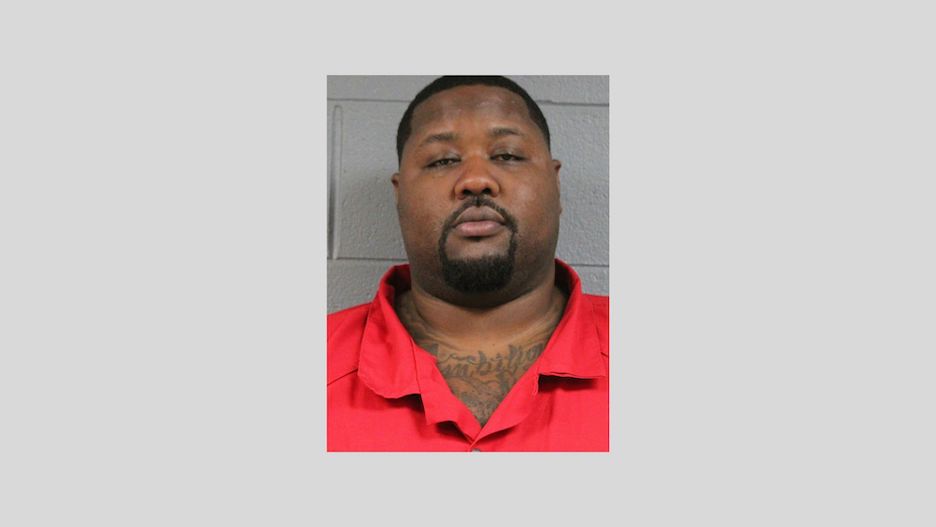
Shayvion Furlow. (Highland County Sheriff's Office mugshot)
After a bench trial lasting a day and a half, Highland County Common Pleas Court Judge Rocky Coss found a Dayton man guilty of 22 counts, including engaging in a pattern of corrupt activity and a major drug offender specification, Tuesday, Sept. 29.
As previously reported, Shayvion Furlow, 34, was indicted April 7 and charged with:
• One count of engaging in a pattern of corrupt activity, a first-degree felony;
• Nine counts of trafficking in a fentanyl-related compound, eight first-degree felonies and one second-degree felony;
• Nine counts of possession of a fentanyl-related compound, eight first-degree felonies and one second-degree felony;
• Having weapons while under disability, one third-degree felony;
• A major drug offender specification; and
• A forfeiture specification.
Highland County Prosecutor Anneka Collins referred to it as “the biggest fentanyl case that Highland County has ever had,” with Coss also saying it was the largest amount of drugs in a case that he had seen during his nearly two decades as judge.
Furlow, who was represented by defense attorney Alex Deardorff, waived his right to a jury trial, with Coss hearing evidence in the case starting Monday morning.
Following closing arguments Tuesday morning, Judge Coss rendered his verdict finding Furlow guilty on all counts.
Furlow was sentenced to a total of 54 years in prison, all of which are mandatory. Under the Reagan Tokes Law, he could serve up to 59.5 years in prison. Furlow was additionally ordered to pay $97,500 in fines, plus he must forfeit over $50,000 in cash and four firearms.
The sentencing breakdown included 11 years each on the engaging in a pattern of corrupt activity and two first-degree felony trafficking in a fentanyl-related compound charges; three years each on six first-degree felony trafficking in a fentanyl-related compound charges; two years on a second-degree felony trafficking in a fentanyl-related compound charge; and 12 months on a having weapons while under disability charge.
The state began trying the case Monday morning. In her opening statement, Collins said that the charges stemmed from a Highland County Task Force investigation that took place over parts of the past decade.
“Task Force members began hearing about a large-scale supplier of fentanyl to Highland County,” Collins said. “No one knew his name at the time. Everyone just called him Bear. Through investigation, we were able to follow vehicles to Dayton, and those vehicles were seen meeting with a vehicle up there.”
Collins said that they eventually tracked the vehicle as belonging to a relative of Furlow, while “dealers in Highland County” identified Furlow in a lineup.
“Two times in ’23, Task Force members were able to take a large quantity of fentanyl as it came back from Dayton into Highland County,” Collins said. “They were immediately able to seize it, and they spoke with the people from whom they took it. Everyone involved in those investigations pointed to Bear as the person from whom they got the fentanyl that they brought back to Highland County.”
Collins told the judge that the Task Force later found a confidential information who was “able and willing to do hand-to-hand transactions with Bear.
“Task Force members met with that person in Highland County,” the prosecutor said. “Deals were arranged over the phone while they were in Highland County. They then drove to Beavercreek, where they would make a second phone call, telling Bear that they were in Beavercreek. He would then give them the direction of what road to exit on and where to go from there.
“An undercover officer drove the informant to those locations. Hand-to-hand transactions were made, and fentanyl was purchased in that way, an ounce at a time, typically, and brought back to Highland County.”
Collins continued that Highland County Task Force agents worked with RANGE (Regional Agencies Narcotics & Gun Enforcement) Task Force agents from Montgomery County. The RANGE agents served search warrants at several different houses Furlow was allegedly connected to and found “a large quantity of fentanyl in a mixture that is basically unique to this defendant,” Collins said.
“They also found presses used to press dope,” Collins said. “They found cut, the different things to mix with fentanyl to lessen its potency and make more available for sale. They found indications that the defendant has no other source of income other than from his drug transactions. They seized over 800 grams of fentanyl from one house.”
Collins concluded that Furlow’s “MO [modus operandi] is exactly the same for every single person that he dealt with,” as he is “very good at what he does” as a dealer.
Deardorff said in her opening statement that Furlow should be found not guilty on all charges because “this case is all about venue.
“In every single count before you, you will not hear sufficient evidence of venue,” Deardorff said. “Venue must be proven beyond a reasonable doubt. It must survive a Rule 29 motion, and in this case, it is lacking on every single count.”
For the engaging in a pattern of corrupt activity charge, Deardorff said “there needs to be an enterprise.
“You will hear no evidence of an enterprise whatsoever,” she said. “[Collins] detailed corrupt activities, drug trafficking, but that's not sufficient to make the count. For a pattern of engaging of corrupt activity in Highland County to be properly venued here, you have to show proof of an enterprise, and the Boyle Supreme Court test details that very clearly. It needs to have a purpose. It needs to have a relationship among the individuals involved and a sense of longevity to support that there's a business, so to say, in Highland County.”
Similarly, for the drug trafficking and possession charges, Deardorff argued that the alleged transactions took place outside of Highland County. That also includes the search warrants that were executed in Montgomery County, where evidence was recovered, she said.
“When you see things like ‘drug trafficking large amounts of narcotics, large amounts are making it here to Highland County,’ then it sounds appropriate to prosecute here,” Deardorff said. “But when the court hears about these transactions, what it will really hear is that local defendants were arrested, and nothing occurred in Highland County. Everything was in Montgomery. That's it. Over an hour away.”
The state’s first witness was Sergeant Jay Beatty of the Greenfield Police Department, an officer with the Highland County Task Force. Beatty testified that the HCTF obtained a search warrant and placed a GPS unit on Hope Rowland’s vehicle, which they tracked in March 2023. Upon the return of Rowland and Daryl Bumgarner to a Greenfield residence, Beatty said the suspects were taken into custody, and a search warrant was executed, revealing narcotics in the vehicle.
During redirect examination, Beatty said that BCI testing revealed that the vehicle contained 55.03 grams, or “right around two ounces,” of fentanyl.
“That is the most amount of fentanyl that I’ve seen in Highland County, ever,” Beatty said.
“Did you have information that they were trafficking that fentanyl?” Collins asked.
“Yes,” Beatty said.
Beatty said there was also “approximately $5,000 total” seized from the investigation.
The second witness was Sgt. Mark Hamilton, a GPD officer who was not working with the Task Force at the time, who testified about a July 2023 incident. Hamilton said that he made a stop on a vehicle in Greenfield that was occupied by Isaac Garrison and Scott Clay. During the stop, Hamilton said he “heard a loud thud” and discovered a bag that “contained an unknown substance” dropped by Clay.
From there, a series of forensic scientists testified about their respective analyses of various drugs and firearms. Lauren Bishop, a forensic chemist with the the Miami Valley Regional Crime Laboratory, was the first scientist called. She spoke about various submissions she analyzed, all of which contained fentanyl and various other substances, including heroin, ketamine, ortho-methylfentanyl and xylazine. The weights of the substances were approximately 329.11 grams, 519.67 grams and 229.36 grams, she testified.
Similarly, the fourth witness, Beth Underwood — a forensic scientist with the Bureau of Criminal Investigation (BCI) — testified about substances she examined, which were found to contain fentanyl and other drugs and weighed 55.30 grams.
Pamela Farley of BCI also testified about assessing substances found to contain fentanyl and other drugs, weighing approximately 27.23 grams. Nickole Dean of BCI said her examination of two other submissions, which revealed fentanyl and other drugs, weighed approximately 28.16 grams and 28.07 grams, respectively.
Kelsie Pestello of BCI testified about identifying 14.14 grams of fentanyl mixed with other drugs in one submission, and approximately 28.16 grams of fentanyl mixed with other drugs in another. Sara Tipton of BCI identified approximately 28.12 grams of fentanyl and other drugs in another test. Amanda White of BCI identified 28.09 grams of fentanyl and other drugs in yet another test.
Another BCI forensic scientist, Devonie Herdeman, testified about DNA swabs taken from various firearms. She said the “DNA profiles were consistent with Shayvion Furlow” on several of the weapons, while on others the “DNA was not sufficient quality for comparison.”
After the testimony of these scientists, Collins called the first of two confidential informants, CI #1, to the stand. CI #1 testified that when she was using drugs, she knew of “Bear” as “the plug of Greenfield” — or “who you go get your drugs from” — and had been introduced to him by someone from Greenfield.
“The person that I would ride with, whoever's buying it, would call [Furlow] from Greenfield, ask him if it was OK to come up, tell him how much they wanted, and then we would head that way, around like Beavercreek or a little bit further,” CI #1 said. “They would call and say, ‘I’m almost there.’ Then when we would get to Dayton, they would call and tell him that we was there, and then he would just say where to meet at, and then we pull up, and the exchange would happen, and we go back.”
“When those calls were made initially — when they would say, ‘Is it good to come up?’ and ‘This is what I want,’ where did those calls originate?” Collins asked.
“In Greenfield,” CI #1 said.
CI #1 testified that she began working as a confidential informant with the Task Force in July 2023. She agreed that it was “suggested that you buy from the person you’re comfortable buying from” and that she would purchase drugs from a Highland County individual, Tara Ralph, “like every other day.”
CI #1 said that Ralph was “calling [the same person] every time” when arranging deals, and that person was “Bear.”
For a July 6, 2023 deal, CI #1 said she “set up the deal with Tara Ralph,” who was “supposed to go up to Dayton and meet Bear.
“I think she ended up giving the money to her brother and Isaac Garrison, and they ended up going up and getting it,” CI #1 said.
CI #1 also testified that she was able to pick Bear out of a lineup presented to her and identified him in the courtroom.
Under cross examination, CI #1 agreed that “the arrangement” she had was to make drug purchases off of Ralph, not “Bear directly.” There was also some heated discussion among counsel and the judge as Deardorff cited Ohio Rule of Evidence 612, regarding “Writing used to refresh memory,” arguing that she “had the right to inspect” the CI’s notes from trial preparation.
“It's not a writing that she used to refresh her memory,” Coss said. “It's trial preparation.”
Ralph was the next witness called by the state and testified that she is in prison for drug trafficking related to the July 6, 2023 case.
“I recall meeting up with [CI #1] and getting money from her to go to the city and buy fentanyl,” Ralph said.
“And who were you going to Dayton to buy fentanyl from in order to fulfill that order and any other orders you had?” Collins asked.
“Bear,” Ralph said.
“Do you know Bear’s real name?” Collins asked.
“No, ma’am,” Ralph said.
Later in the examination, however, Ralph identified Furlow as “Bear” in the courtroom.
Ralph testified that she would call “Bear” from Greenfield, “ask if I could come up,” then would call him again from Beavercreek. From there, “Bear” would tell her which exit to take and they would meet up.
“About how many times, if you can recall — and it doesn't have to be an exact number — but just about how many times did you deal with Bear?” Collins asked.
“Mainly every day,” Ralph said.
“Is this around 2023?” Collins asked.
“Yeah,” Ralph said.
“Prior to July 6, 2023, how long had you been dealing with him?” Collins asked.
“Couple years, on and off,” Ralph said.
Ralph testified that “somebody from Greenfield just gave me his phone number” initially, and she would either buy a half an ounce for $500 or an ounce for $1,000 at a time.
“Did you deal with Bear long enough that he allowed you to call, make the deal, but send someone else to pick up?” Collins asked.
“Yes,” Ralph said.
“Going back to the deal on July 6, 2023, did you personally drive to Dayton yourself to meet Bear, or did you send someone else?” Collins asked.
Ralph testified that she sent Clay and Garrison to make the buy and that they were arrested in Greenfield.
Under cross examination, Ralph said that she “always” purchased the drugs in Dayton, not Highland or Greene counties.
“Where were you when you called and asked if you could, if it was good to come?” Collins asked during redirect examination.
“When I first called, I'd be at home in Greenfield,” Ralph said.
“Is that also when you would tell him how much you wanted?” Collins asked.
“Yes,” Ralph said.
Garrison, the next witness, is also currently incarcerated on drug charges. When asked who the major supplier in the Greenfield area was, he testified that it was Ralph, and he said that he went to Dayton to “pick up what she ordered,” as Collins said, on three different occasions.
“Would you receive something in exchange for going there?” Collins asked.
“Sometimes I did,” Garrison said. “Some fetty [fentanyl].”
Garrison said he was meeting Ralph’s “person,” who he said was “called Bear or something like that,” in Dayton. For the July 6, 2023 incident, he said he “didn’t want to be sick — dopesick” — and agreed to go to Dayton “to get some dope.”
“Had you previously used fentanyl that came from Bear?” Collins asked.
“Pretty sure, yeah,” Garrison said.
“Why would you be pretty sure?” Collins asked.
“That’s where we got it from,” Garrison said.
Garrison also identified Furlow as “Bear” in the courtroom.
The next witness was a second confidential informant who gave testimony about her work with the Task Force. CI #2 said that she told HCTF officers she could purchase from someone she knew as “Bear,” whom she identified as the defendant, although she said she did not know his real name. She said that she met him in 2019 “through somebody else” and continued to purchase drugs from him in the following years as a user.
“How were the deals arranged when you would make a purchase from Bear?” Collins asked.
“I would just call and ask him if it was OK to come up, and if I got an answer ‘yes,’ I would go up and call when I got there,” CI #2 said. “He would usually say to call him when I got to Beavercreek, or around there, and I would, and get the next place that I was going to.”
From there, CI #2 said “Bear” would direct her to which exit to take and where to park, usually at a fast food restaurant or an apartment complex.
“I would just wait for him to show up and then make the transaction when he did and leave afterwards,” she said.
“It was the same thing prior to working for the Task Force?” Collins asked.
“Typically, yes,” CI #2 said. “It was a lot of the same locations.
“It was very repetitive.”
“And how much were you purchasing from Bear at a time prior to 2025?” Collins asked.
“It would usually be a half ounce to an ounce at most,” CI #2 said.
Prior to working with the Task Force, CI #2 said she would “use a lot of [the drugs] myself” and would also sell the drugs.
CI #2 testified that she eventually set up multiple deals with Bear in 2025 while working as a CI for the Task Force.
“I would meet with them in Highland County, and we would call and get the OK to come up, and we would leave from Highland County and go toward Dayton,” CI #2 said. “We would call when we got to Beavercreek and go to the location that we were told.
“Whatever place I was told to go to, I would call again from there.”
CI #2 said that the Task Force recorded her calls, and an officer would drive with her to Dayton. She said they would leave from Hillsboro and travel to Dayton to purchase an ounce from “Bear.”
Under cross examination, CI #2 said that “not every single time” were calls made from Beavercreek, as sometimes she would call to verify prices and amounts from Highland County.
“But every exchange was in Dayton?” Deardorff asked.
“Correct,” CI #2 said.
The final witness called Monday morning was Highland County Sheriff Randy Sanders, who previously worked as the Highland County Task Force lead investigator before assuming office as sheriff.
Sanders testified that he was “familiar” with Ralph, Clay and Garrison during his work with the HCTF and review a log of surveillance from July 6, 2023.
Sanders said that the HCTF “arranged to purchase” fentanyl from Ralph using two CIs.
“During the conversation, Tara said she was going to Dayton,” Sanders said. “The deal was set up where we provided $300 to the CIs to give to Tara Ralph in exchange to get what she had. The rest would come later.”
Sanders testified that the HCTF officers had surveillance on Ralph’s vehicle and residence. He testified that he followed the vehicle, driven by Garrison with Clay as a passenger, to Dayton.
Sanders said there was “a large person” in the other vehicle but that he could not identify the individual in Dayton. He also agreed that the “deal went south” when Garrison and Clay were arrested.
“How long have you done investigations of drugs in Highland County?” Collins asked.
“That would go back starting in the mid-’80s,” Sanders said.
“Do you recall the first time you heard the name ‘Bear?’” Collins asked.
“Not the first time,” Sanders said. “I know that I was hearing it consistently prior to 2019. I remember seeing the difference in the dope.
“That’s when I first started hearing the name ‘Bear.’”
Sanders added that “several” people he was working with at that time had “Bear” listed in their phones.
Sanders said he “eventually” learned Bear’s identity through running his tags and conducting an investigation, including seeking records on Furlow’s taxes.
After breaking for lunch, Monday afternoon’s witnesses included several undercover officers. Officer #1 was an officer with the RANGE Task Force in Montgomery County and testified regarding an October 2025 incident in which he searched a black Ford Taurus and a residence in Montgomery County. Officer #1 said he located “around $1,100” in cash and a credit card with the name “Shay Furlow” in a wallet found in the vehicle. At the house, Officer #1 located “firearms and gun magazines” and ammunition in a dresser, all of which were seized.
Officer #2, another RANGE Task Force officer, testified about “security and surveillance” provided by the RANGE Task Force to assist Highland County officers on Aug. 19, Aug. 21, Aug. 27, Sept. 11, Oct. 10 and Oct. 15m 2025. In all cases, Officer #2 said he observed the same black Ford Taurus involved.
Officer #2 also said that when RANGE officers seized money from the wallet in the vehicle, they located $900 in cash with serial numbers matching the buy money provided by the Highland County Task Force.
Officer #2 reviewed exhibits containing photos from a search warrant executed at a Dayton residence. The photos depicted “several bags of suspected fentanyl,” including some “vacuum sealed” in a “hide-a-can in a kitchen cupboard;” a dietary supplement he said was commonly used as a “cutting agent” mixed with drugs such as fentanyl; handgun magazines; approximately $2,000 in cash; and a “used digital scale.”
At another residence allegedly connected with Furlow, Officer #2 reviewed photos of drug paraphernalia recovered, including “multiple hydraulic presses,” scales and baggies continuing suspected drug residue.
Officer #3, another RANGE officer, testified about providing surveillance and observing Furlow “driving a black Ford Taurus and entering his residence” in Dayton during multiple buys before assisting with the search warrant execution. Officer #3 testified that he collected various items, including suspected drugs and the firearms, for lab testing.
Officer #4, a Montgomery County Sheriff’s deputy, reviewed numerous photos from search warrants executed at a Dayton residence.
Officer #5, who works with the Ohio Attorney General’s Narcotics Unit and the RANGE Task Force, also testified about the search warrants in Dayton and reviewed exhibits with photos from the residence.
Officer #6, also with the Montgomery County Sheriff’s Office, reviewed exhibits from the search warrants as well. That included seizing four checks totaling a combined $52,251.15.
After the officers’ testimony, Rowland took the stand. She testified that in 2023, she was using “three, three and half grams [of fentanyl] a day.” When asked where she was obtaining her drugs, Rowland said that she and Bumgarner “were going up to the city to get some off this guy named Bear … every couple days.” She identified Furlow in the courtroom as Bear.
Rowland testified that they would work out the deal via cell phone, calling from Greenfield and then calling “Bear” again from Beavercreek. From there, she said “Bear” would “just tell us where to meet,” usually at a fast food restaurant or apartment complex.
“When you arrived at the location, what would then happen?” Collins asked.
“They would trade money for drugs,” Rowland said.
“Who’s ‘they?’” Collins asked.
“Daryl [Bumgarner] and Bear,” Rowland said. “You just pull up beside the window, and they would just trade it off.”
Through more questioning, Rowland said that “toward the end,” she and Bumgarner were purchasing “two ounces” at a time “every couple days” and bringing it back to Highland County.
“Were you buying more than you would use for personal use?” Collins asked.
“Yes,” Rowland said. “I specifically wouldn’t sell, but I do know that Daryl would make transactions with people.”
Regarding the March 2023 incident, Rowland said that she drove Bumgarner to Dayton to make the deal and returned to Greenfield, where there were “cops everywhere” waiting for them at their residence.
After Deardorff questioned Rowland on her cooperation with the task force, Collins asked if Rowland named “any other drug supplier other than Bear” in her talks with the HCTF.
“No,” Rowland said.
“Was there any other drug supplier that was supplying you?” Collins asked.
“No,” Rowland said.
“How long prior to March of ’23 had you been dealing with Bear?” Collins asked.
“I don’t know specific days, but I know it was over five years,” Rowland said.
Monday’s testimony concluded with a Highland County Task Force investigator testifying at length about the buys arranged by CI #2 and how surveillance was performed. He also reviewed numerous exhibits, including photos of the drugs purchased, pay vouchers for the CI and recordings of phone call conversations between CI #2 and Furlow.
The trial resumed Tuesday at 9 a.m. with the state presenting its final witness, Captain Chris Bowen of the Highland County Task Force and Highland County Sheriff’s Office. After Bowen explained the process of working with CIs and other Task Force officers, Collins questioned him regarding his surveillance of Rowland’s vehicle following “several stops” in Dayton in March 2023. After that trip, Bowen said officers seized 55 grams of fentanyl from Rowland’s vehicle.
Bowen also testified that in August 2025, he “conducted surveillance” for a deal with CI #2 and “Bear,” involving a black Ford Taurus. Bowen said they had been “familiar” with the license plate number for that car since July 2025 from a previous deal.
“That’s the vehicle the defendant drove every time,” Bowen said.
Bowen testified that he was involved in all of the controlled buys set up between August and October 2025. Generally all of them took place at a fast food restaurant or apartment complex, Bowen said, with “the same procedures every time.”
Bowen also testified that for 2023 and 2024, he determined that Furlow “had not filed any income taxes.”
After Bowen testified for close to 40 minutes, the state rested their case and moved for the admission of exhibits, with Coss sustaining Deardorff’s objection to certain exhibits being included.
Deardorff then moved for dismissal of the case based on failure to establish venue.
“The court heard from over 20 witnesses, police officers who had access to phones, both the defendants and the buyers, to residences, personal effects, and even direct testimony from the civilians,” Deardorff said. “Not a single one even insinuated there was a reference to Highland County via text message, oral statement to Bear, oral statement from Bear or action that would suggest this place is properly venued here.”
She further claimed that the state failed to prove “Furlow engaged in a pattern of corrupt activity.
“In this case, every single witness quickly confirmed there was no relationship here,” Deardorff said. “Most did not even know his name or anything about him.
“There is no fronting of money to individuals, no fronting of drugs to individuals, no shared profits, no controlled pricing in Highland County. Here we have quick deals, under a minute, in very public, very open spaces in Dayton, Ohio.”
Deardorff also pointed out there is no evidence of “a single time where [Furlow] initiated this conduct.” She reminded the judge that “every single person knew about this Beavercreek call, so much so that the task force set up the arrangement there for the call to be made.
“If they're arranged in Highland, why are we calling in Beavercreek to arrange a deal?” she said. “Why arrange the deal twice? Because it always happened in Beavercreek, which is Greene County, Ohio. The case law is overwhelming about requiring explicit details of the deal and knowledge about where the buyers are coming from for venue to establish. This is not argument from a defense attorney. This is well-established law.
“The state believes that someone pressing dial from Highland County with nothing more, and no representations about where they are, is enough, and they have to, because that's their whole case being venued here.”
Deardorff continued that the buyers also did not indicate that they were coming from Highland County on the recorded calls.
“Anytime someone is driving in a northward direction does not establish that they proved it was coming from Highland County,” Deardorff said. “I don't know how the state can prove that those calls and those statements being made were anything more than suggesting that this was from Georgetown, Cincinnati, Batavia, Florence, Evansville. If you cannot distinguish between Hillsboro or Highland County and another county when you're saying ‘coming up,’ you did not establish venue.”
Deardorff concluded that the search warrants to which officers testified did “nothing but just solidify where this case belongs — not in Highland County.”
Collins responded with several different appellate citations establishing factors for the engaging in a pattern of corrupt activity charge. She argued that Furlow was “the plug” for drugs for Greenfield, as the buyers were both using and reselling the drugs purchased from him.
“Each of these dealers phoned Bear from Greenfield in Highland County,” Collins said. “Our own CI phoned Bear from Highland County.
“Another thing courts look at is the participants coordinating activities between each other. This is huge in this case because Bear was essentially the plug for Greenfield. During their testimony yesterday, every witness testified that they dealt with someone else and sent other runners, or they took somebody else with them. Every single witness that began dealing with Bear directly testified that they met him through somebody else from Greenfield. That's how you got in and got the better deal, is because somebody else from Greenfield took you up to meet him.”
Collins added that venue was “extremely easy” to establish.
“The witnesses all describe calling the defendant from Highland County and arranging the amount of drugs and whether they can head to Dayton before traveling to Dayton,” Collins said. “The testimony describes daily purchases from the same defendant through the same process — calls from Highland County, agreement on the purchase, travel to Dayton and exchange of money for drugs. Those facts support the charges.”
Deardorff countered that there is “no evidence in this particular case that there's been any knowledge” by Furlow of where the buyers were coming from.
“It could have been anybody showing up to the [fast food restaurant],” Deardorff said. “There was no knowledge of where it was coming from, where it was going, and that is the huge distinction here. No witness said that at all or that there was any sort of ongoing relationship between them. When they wanted something, they called.”
Coss called a recess at 10:24 a.m. to review “the evidence as well as the case law” before issuing a ruling on Deardorff’s motion.
“The court finds that — based on the evidence that's before the court at this time, and my review of the case law — that venue in Highland County is appropriate, and so the motion to dismiss the charges is overruled,” Coss said. “The motion for Rule 29, particularly as to the question on count one, the court finds the evidence is such that it could support a finding of guilty, and therefore the motion is denied.”
At that point, the defense rested with no witnesses presented, and Coss heard closing arguments from both attorneys.
Collins told Coss that “this is the biggest fentanyl case that Highland County has ever had” with nearly 850 grams of fentanyl recovered at Furlow’s residence, as well as weapons and drug paraphernalia found at his home and two other related properties.
“[A Montgomery County officer] said it best when he described Bear as a large-scale drug operation,” Collins said. “The Highland County Task Force was finally able to hook up with someone that was able and willing to buy directly from Bear.
“Not only the deals that were not set up by law enforcement or with the help of law enforcement and CI, but even the deals from the Ralph deal and the Bumgarner deal were all done exactly the same. To deal with Bear, you have to deal his way.”
Collins continued that IRS records from a several-year span show “no indication that [Furlow] had an income from anywhere else,” yet he had “over $50,000” in one bank account.
In her closing argument, Deardorff said that “venue still needs to be proven beyond a reasonable doubt, despite our spirited arguments on the motion earlier.” She argued that “‘beyond a reasonable doubt’ was certainly not met” for the Rowland and Bumgarner purchase in Dayton, nor for the Garrison purchase, as he testified about calling from Beavercreek and that it was not proven a call was made from Highland County.
For the 2025 controlled buys by CI #2, Deardorff asked that if it was “so, so obvious” to Furlow that the callers were coming from Highland County, “why is it always in Beavercreek?
“If [CI #2] was making deals as frequently from Highland as the state wishes you to believe, why not just call and then go from there?” Deardorff said. “They have to stick to the plan, which is in Beavercreek, Ohio, I arrange the deal and tell them where I'm going.”
Deardorff acknowledged that drug trafficking “is a corrupt activity, but there has to be an enterprise.
“Ten traffickings in an indictment does not automatically add an engaging if the person sold hand in hand 10 times,” Deardorff said. “That's not what the law says.”
She added “some sort of drug dealing arrangement where everybody is benefiting” was not proven.
In her final closing argument, Collins said that the law “allows offenses committed in other jurisdictions as they are in the course of criminal conduct” to be tried. She pointed out that all of the witnesses “testified the same way” about the process of calling from Greenfield, leaving and then calling from Beavercreek.
“It doesn't matter that he doesn't know that it's in Highland County,” Collins said. “Although I believe he absolutely knew, it doesn't matter. I think the evidence shows that he knew because of knowing what exits were coming up, knowing and only dealing with people after they had met with other people from Greenfield.”
Collins concluded that it is “not accurate to say that none of these deals started in Highland County, or that they all started in Beavercreek.
“The evidence is proof beyond a reasonable doubt, and the state has proven beyond a reasonable doubt that every single deal with the CI started in Highland County,” Collins said.
Coss said that he analyzed both the venue issue and the evidence over the 40-minute break and reviewed his decision in detail.
“Addressing the issue of criminal enterprise, the engaging in a pattern of corrupt activity — initially, when I was thinking about this and analyzing it, which is often the case, my experience, from the top down,” Coss said. “But then, after looking at this during my review of the evidence and the arguments about venue on the Rule 29, is that when you look at it, the association in this case is kind of viewed from the bottom up. We have an association of a group of people from Greenfield, who are dealing, buying drugs, or using. I think in almost every case, if not every case, as the witnesses have testified, they were selling part of it. They were buying fairly large amounts and were going back regularly, as often as every other day, buying large amounts far beyond the personal usage.
“Furthermore, we have the evidence that, for instance, in Tara Ralph, while she arranged a deal, she sent Isaac Garrison and Mr. Clay to pick it up, and so we have this combination of people in Greenfield, and then the common thing that I heard from all of the witnesses that purchased from Mr. Furlow were that in order to be able to buy from him, they had to get an in, be introduced from somebody that knew him from Greenfield.”
Coss pointed out that several of the witnesses are currently serving prison time or are on community control in relation to this case.
“The relationships here are very key, I think, in the sense that all these folks in Greenfield are all helping each other and introducing them to Mr. Furlow, and he is furnishing the drugs for these people in Greenfield,” Coss said. “There's clearly relationships, and there's longevity.
“There was no hesitation. I heard all these calls. They were short. There was no question he was comfortable with the people that were calling him and was willing. He knew him and was willing to sell drugs.”
Coss said that “the evidence shows that [Furlow] knew that the drugs were going outside the limits of Montgomery County because he was giving directions about the exits.
“The deals all started in Highland County, and the evidence is clear that they all started in Highland County,” Coss said.
After continuing to explain his findings, Coss announced that he found Furlow guilty of all 19 counts, including findings on the amount of drugs involved the charges; a finding that Furlow is a major drug offender; and the forfeiture of five of the six items included in the forfeiture specification. Ordered forfeited were $52,491.15 in U.S. currency and four semi-automatic pistols with one magazine each.
Coss then called for another break prior to sentencing. When parties reconvened, counsel and the judge engaged in nearly an hour of discussion as to the law on sentencing.
Deardroff asked Coss to “have mercy” on Furlow and to consider at least some concurrent sentences to “allow him the ability to potentially live a life after this.” Furlow declined to speak.
Coss said that he would be imposing consecutive sentences, as several of the offenses merged for sentencing.
“This conduct was committed as a course of one or more courses of conduct involving multiple individuals over a period of time, and the court finds that the harm that’s caused by the humongous amount of drugs that you have piped into this county over the years is such that one single prison term will not adequately reflect the seriousness of your conduct,” Coss told Furlow. “The amount of fentanyl was just unbelievably large, and you've been pumping that into this county for years.
“It's clear from the evidence that your occupation is a major drug dealer, and consecutive sentences are not disproportionate to the seriousness of the offender's conduct and to the danger you pose to the public due to your drug dealing.”
In a separate entry and as stipulated at the sentencing hearing, Coss ordered that Furlow “may be released on a $500,000 bond” if Furlow files a notice of appeal.