


Education is close to home
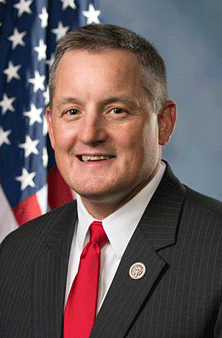
By U.S. Rep. Bruce Westerman
R-Arkansas
We all have a story to tell regarding our time in the classroom. Whether it was staying up late to finish a homework assignment, gathering with classmates to prepare for an upcoming exam, or even participating in extracurricular activities, our time from elementary to high school was deeply rooted in our homes and our communities.
For many of us – especially those who grew up in more rural areas like much of the Fourth District – school didn’t just stay on the campus; it extended into our everyday lives. Teachers led Sunday school and attended the same churches, coaches wandered through the produce section at our local grocery stores, and school administrators frequented the same restaurants, enjoying a meal with their own families.
Our education system is woven into the fabric of our personal lives and our community. And as such, the decisions made to best serve our schools, teachers, and students must be made at the state and local levels.
My time serving on a local school board and in the state legislature made that very apparent. A bureaucrat in Washington has no idea what is going on in the small town of Magnolia. They have no idea what funding priorities could have the greatest impact on students’ learning in Booneville or on supplying teachers with better resources in Hope.
Education works best when decisions are made as close to our students and their families as possible. That’s why I was pleased to see the U.S. Department of Education’s approval for Arkansas' Returning Education to the States Waiver this week.
This waiver provides the Natural State with the flexibility needed to empower our local school districts while reducing overarching, out-of-touch federal bureaucracy. Education funding will become more streamlined, allowing local leaders to decide how federal funds are best spent. We’ll see greater accountability for alternative learning environments. At the heart of this waiver, our schools will be able to receive the resources they need to meet the unique needs of the students in their classrooms.
We’ve seen the latest testing results from this past school year, and we’ve been encouraged by the number of success stories, the students who are learning more effectively, and our teachers who feel more supported. Through the excellent work at the state level, we are preparing our students well for success through learning.
This waiver is another excellent step in the right direction for placing our local and state leaders back in the driver’s seat when it comes to Arkansas’ education system. In Washington, I remain committed to working on the federal level to champion legislation like my bill, the Focus on Learning Act, that empowers our states, uplifts our teachers, and supports our students.
Arkansas has the opportunity to lead the nation and set the standard for public education. By shifting the focus away from bureaucratic standards, we can begin to prioritize what is most important: teacher and student success. I look forward to continuing my work in Congress to achieve that goal not just for Arkansas, but for the United States as a whole.
Late to the party
Snuck into this otherwise rational column is a reference to the "Focus on Learning Act." This bipartisan bill would order the Surgeon General to conduct a study about students and cell phone usage. I can save the Feds money and time - cell phones and school don't mix. On top of that, the bill allocates $5 million for states to purchase locking devices for individual cellphones. Using old school math, that equates to 250,000 Yondr pouches for nearly 50 million public school students in America. Someone's getting even richer from this deal. The federal government continues to amaze.