


Hillsboro Woman’s Club meets ‘Rosie the Riveter’
Lead Summary
By
Gretchen Huffman-
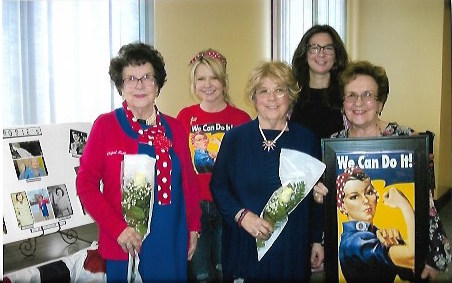
The Hillsboro Woman’s Club took a leap back in time at their March meeting when they met Rosie the Riveter and her family.
The first speaker was Bess Hewitt, who spoke of her sister, Georgia Hufford, who was one of the original “Rosies.”
Hewitt informed her listeners that the 1940s changed America. During the Great Depression, most people did not want women working outside the home because it took jobs away from men, the traditional “breadwinners.” However, when most men were serving in the Armed Services during World War II, women were recruited to work in U.S. aircraft and munitions factories, which resulted in some of its highest production rates in history.
Women worked as nurses, drove trucks, repaired airplanes and provided clerical work. Between 1941-45, the percentage of women in the workforce increased from 27 percent to 37 percent, and by 1945, nearly one out of every four married women worked outside the home. This was considered to be the beginning of the “women’s movement” in America.
The Willow Run Bomber Plant in Ypsilanti, Mich. was built in 1941-42 especially for mass production of aircraft, specifically the B-24 Liberator heavy bomber. When Hufford’s father traveled to Michigan in 1942 or 1943 to work in the plant, Hufford and her older sister Virginia joined him, leaving their mother and seven siblings behind in Kentucky. During the train ride, they were joined by an older relative, their aunt Bertha Chase, who already had a home in Michigan. The sisters stayed with Chase for two weeks until they were hired, trained for positions in the plant and received their first paychecks.
The Hufford sisters joined 42,000 workers at Willow Run to build more than 8,600 B-24 bombers. Virginia was placed as a driller/riveter. Georgia was a rivet bucker, meaning she was on the other side of the sections being riveted. She was to hold tightly a 10-inch long by two-inch wide iron bar that was used to flatten the rivets.
Even though working conditions were hot and noisy with no fans, no gloves and no earplugs, Georgia Hufford loved the work. Women were paid 75 cents an hour, and top pay was $1.15. The company provided overall/jumpsuits, but they were too large for Hufford, who had to roll up the pant legs.
When the Hufford sisters first arrived in Michigan, they found a large community known as Willow Village, which was built adjacent to the plant with hastily erected housing for 15,000 of the plant’s workforce, a large cafeteria, a movie theater that seated 1,200 and showed movies night and day, a hospital, post office, grocery store and a church built by the Fords.
“Willow Lodge” consisted of 15 buildings containing 1,900 rooms. The second dormitory, “West Lodge,” contained 1,960 rooms. The Hufford sisters stayed in a dormitory room during their training period and then rented a family trailer with their father until he returned to Kentucky.
With many male workers having been drafted into the military, the government created a recruitment campaign called Rosie the Riveter, a cultural icon as a symbol of American feminism, patriotism and women’s economic power. This symbol, also known as Women War Workers, was to be used on posters and ads to encourage and recruit women and minority workers to volunteer.
Hufford, one of these “Rosies,” is still living in the Highland County area and doing well. Hufford is known locally for her nearly 50-year business, Georgia’s Bridal Shop, with which she remained active until retiring at the age of 89.
The next speaker was Hufford’s daughter, Scarlett Hufford-Thomas, who told of the Honor Flight trip she and her mother made to Washington, D.C. in March 2016 as part of the celebration and recognition of women’s contributions to the war effort.
While they were in D.C., Brigadier General Wilma Vaught thanked all of the Rosies for their services. The last stop of the day was Arlington National Cemetery, where the 30 Rosies present were given front-row seats for the Changing of the Guard Ceremony. A special tribute was given to the Rosies, who were alerted to watch for it. During the ceremony, when a member of the Guard scraped his foot while walking, it was actually a tribute to the veterans present and for the Rosies as well.
When they went to the airport, they were surprised to see a big band playing swing music and dancing the jitterbug. Hufford couldn’t resist joining them. Back on the plane, they were served snacks and given many letters of appreciation that had been previously collected from the Rosies’ families and friends.
There was one more surprise. A member of each branch of the military formed a line, in full dress uniforms, to honor their return. Members of Hufford’s family also surprised her by waiting at the airport in Detroit, all holding “We Love Rosie” signs.
The first speaker was Bess Hewitt, who spoke of her sister, Georgia Hufford, who was one of the original “Rosies.”
Hewitt informed her listeners that the 1940s changed America. During the Great Depression, most people did not want women working outside the home because it took jobs away from men, the traditional “breadwinners.” However, when most men were serving in the Armed Services during World War II, women were recruited to work in U.S. aircraft and munitions factories, which resulted in some of its highest production rates in history.
Women worked as nurses, drove trucks, repaired airplanes and provided clerical work. Between 1941-45, the percentage of women in the workforce increased from 27 percent to 37 percent, and by 1945, nearly one out of every four married women worked outside the home. This was considered to be the beginning of the “women’s movement” in America.
The Willow Run Bomber Plant in Ypsilanti, Mich. was built in 1941-42 especially for mass production of aircraft, specifically the B-24 Liberator heavy bomber. When Hufford’s father traveled to Michigan in 1942 or 1943 to work in the plant, Hufford and her older sister Virginia joined him, leaving their mother and seven siblings behind in Kentucky. During the train ride, they were joined by an older relative, their aunt Bertha Chase, who already had a home in Michigan. The sisters stayed with Chase for two weeks until they were hired, trained for positions in the plant and received their first paychecks.
The Hufford sisters joined 42,000 workers at Willow Run to build more than 8,600 B-24 bombers. Virginia was placed as a driller/riveter. Georgia was a rivet bucker, meaning she was on the other side of the sections being riveted. She was to hold tightly a 10-inch long by two-inch wide iron bar that was used to flatten the rivets.
Even though working conditions were hot and noisy with no fans, no gloves and no earplugs, Georgia Hufford loved the work. Women were paid 75 cents an hour, and top pay was $1.15. The company provided overall/jumpsuits, but they were too large for Hufford, who had to roll up the pant legs.
When the Hufford sisters first arrived in Michigan, they found a large community known as Willow Village, which was built adjacent to the plant with hastily erected housing for 15,000 of the plant’s workforce, a large cafeteria, a movie theater that seated 1,200 and showed movies night and day, a hospital, post office, grocery store and a church built by the Fords.
“Willow Lodge” consisted of 15 buildings containing 1,900 rooms. The second dormitory, “West Lodge,” contained 1,960 rooms. The Hufford sisters stayed in a dormitory room during their training period and then rented a family trailer with their father until he returned to Kentucky.
With many male workers having been drafted into the military, the government created a recruitment campaign called Rosie the Riveter, a cultural icon as a symbol of American feminism, patriotism and women’s economic power. This symbol, also known as Women War Workers, was to be used on posters and ads to encourage and recruit women and minority workers to volunteer.
Hufford, one of these “Rosies,” is still living in the Highland County area and doing well. Hufford is known locally for her nearly 50-year business, Georgia’s Bridal Shop, with which she remained active until retiring at the age of 89.
The next speaker was Hufford’s daughter, Scarlett Hufford-Thomas, who told of the Honor Flight trip she and her mother made to Washington, D.C. in March 2016 as part of the celebration and recognition of women’s contributions to the war effort.
While they were in D.C., Brigadier General Wilma Vaught thanked all of the Rosies for their services. The last stop of the day was Arlington National Cemetery, where the 30 Rosies present were given front-row seats for the Changing of the Guard Ceremony. A special tribute was given to the Rosies, who were alerted to watch for it. During the ceremony, when a member of the Guard scraped his foot while walking, it was actually a tribute to the veterans present and for the Rosies as well.
When they went to the airport, they were surprised to see a big band playing swing music and dancing the jitterbug. Hufford couldn’t resist joining them. Back on the plane, they were served snacks and given many letters of appreciation that had been previously collected from the Rosies’ families and friends.
There was one more surprise. A member of each branch of the military formed a line, in full dress uniforms, to honor their return. Members of Hufford’s family also surprised her by waiting at the airport in Detroit, all holding “We Love Rosie” signs.