


Potential wind energy revenue would be reinvested in city
Lead Summary
By
Brandy Chandler-brandychandler@gmail.com
Although a prop osed project to bring green energy wind technology to the city of Greenfield will not create a significant number of permanent jobs, according to a recent study, the revenue from the wind turbine project could create enough funds for the city to reinvest in itself and businesses, thereby creating jobs.
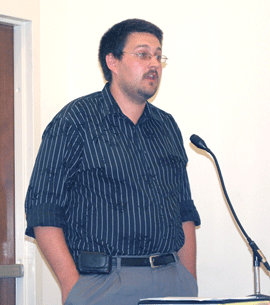
Paul McPherson, a Greenfield native and Purdue University student in the area of mechanical engineering and wind energy, addressed the Greenfield City Council June 15 on the short- and long-term goals of the project, expectations, and issues that need to be considered. Council chairperson Betty Jackman said that McPherson has been working with the city on a voluntary basis.
In May, council approved working toward a feasibility study for the Green Field Alternative Energy Resource and Education Center. The center would be located on 87 acres off Lovers Lane in the Greenfield Industrial Park and would be home to eight to 11 energy-generating wind turbines. Greenfield City Manager Bishop said it was estimated that each turbine could produce $125,000 worth of electricity per year.
The immediate goal of the center would be to conduct a feasibility study, according to McPherson, which would include identifying zone requirements, submission of an FAA form to obtain clearance from Federal Avian Administration and the Ohio Department of Transportation division of aviation to proceed with development projects, analysis of one-site utility bills, site visit and research, evaluation of local wind resources, identifying wind turbine options, calculating energy production estimates, identifying utility interconnection requirements, performing a financial analysis — including the cost to install and operate a turbine payback period and return on investment.
Bishop has said the cost of the feasibility study would be approximately $100,000, and McPherson said it would take approximately six months to complete. Once the study is completed and funding resources are obtained, McPherson said, the city would "begin looking for developers to erect such a site. Starting small with the city land with approximately five to seven wind turbines and several solar panel, depending on how turbines and solar panels can be positioned to achieve maximum efficiency."
During this preliminary study McPherson said he used the cost of wind energy in Indiana as a base to see if the center in Greenfield would be profitable, and all indicators thus far show the project would be profitable. Generators of electricity in Indiana currently charge in the area of .5 cents a kilowatt hour, he said, and that electric companies are not obligated to buy-instate. So the rates the city charges would have to be competitive.
McPherson presented council with a map from the National Weather Center that shows Ohio's wind energy resource and potential, based on the "mean of wind speed at 100 meter height." Most of Highland County, according to the map, have 6.5 to 7.0 mean speech, with speeds of 14.5 to 15.7 miles per hour, which McPherson said, "are not the best" but could be profitable. One of the positive aspects of the area for the project, he said, is that there are so many miles of open farm land. Most areas in the country with the highest wind speeds, he said, are already developed and cannot be used for turbine installation. The current landscape of Greenfield and surrounding areas could easily be developed, and building partnerships with other communities and surrounding cities could be a positive thing for expansion.
The project would not create a lot of long-term jobs in the area, though maintenance crews and manager positions would be needed to maintain the turbines, and there would be some short-term constructions jobs that could potentially last for "years," he said.
The main benefit to the city would be in the revenue created from the project that would be used to reinvest in the city, he said.
A key component to the development of the project would be in gaining the trust and support of area farmers, who could receive stipends of $3,000 to $5,000 for locating turbines on their land. McPherson said farmers need to be made aware that they can continue to raise crops or cattle on their land, there is "little or no risk involved," there are possible tax incentives and that this is a way of working with the community to support Green energy to help promote economic development.
There was a caution to landowners in that, "If inspired by this project to seek outside wind turbine developers to review (the) area, consider the fact that these companies are nationwide companies and that the profits will not be going directly to the community. By joining forces with the city and working to establish a land leasing agreement with the city/local developer, profits will help build a stronger community for future generations."
The "true profit" in the project is being the owner of the completed project, as "the true money is in being the developer and owning the devices producing the electricity.
"While the project itself will not create an abundance of full-time positions, and the profits will probably enter the general funds of the city, a substantial portion of revenue from the projects should be used to reinvest in the community and help bring new business ventures to Greenfield that provides the needed jobs to the area.
McPherson said Bishop asked him to set up a tour of a wind farm in northern Indiana to gather more information, and that members of council are welcome to attend.
"This project is an attempt to revitalize the local economy and be an example for cities throughout the midwest at how a small town can become more self-sustaining for both revenue stream and energy production. This project also has the potential to be a model for how government, education and private sector can work together to develop a stronger community."
Although a proposed project to bring green energy wind technology to the city of Greenfield will not create a significant number of permanent jobs, according to a recent study, the revenue from the wind turbine project could create enough funds for the city to reinvest in itself and businesses, thereby creating jobs.
Paul McPherson, a Greenfield native and Purdue University student in the area of mechanical engineering and wind energy, addressed the Greenfield City Council June 15 on the short- and long-term goals of the project, expectations, and issues that need to be considered. Council chairperson Betty Jackman said that McPherson has been working with the city on a voluntary basis.
In May, council approved working toward a feasibility study for the Green Field Alternative Energy Resource and Education Center. The center would be located on 87 acres off Lovers Lane in the Greenfield Industrial Park and would be home to eight to 11 energy-generating wind turbines. Greenfield City Manager Bishop said it was estimated that each turbine could produce $125,000 worth of electricity per year.
The immediate goal of the center would be to conduct a feasibility study, according to McPherson, which would include identifying zone requirements, submission of an FAA form to obtain clearance from Federal Aviation Administration and the Ohio Department of Transportation division of aviation to proceed with development projects, analysis of one-site utility bills, site visit and research, evaluation of local wind resources, identifying wind turbine options, calculating energy production estimates, identifying utility interconnection requirements, performing a financial analysis — including the cost to install and operate a turbine payback period and return on investment.
Bishop has said the cost of the feasibility study would be approximately $100,000, and McPherson said it would take approximately six months to complete. Once the study is completed and funding resources are obtained, McPherson said, the city would "begin looking for developers to erect such a site. Starting small with the city land with approximately five to seven wind turbines and several solar panel, depending on how turbines and solar panels can be positioned to achieve maximum efficiency."
During this preliminary study McPherson said he used the cost of wind energy in Indiana as a base to see if the center in Greenfield would be profitable, and all indicators thus far show the project would be profitable. Generators of electricity in Indiana currently charge in the area of .5 cents a kilowatt hour, he said, and that electric companies are not obligated to buy-instate. So the rates the city charges would have to be competitive.
McPherson presented council with a map from the National Weather Center that shows Ohio's wind energy resource and potential, based on the "mean of wind speed at 100 meter height." Most of Highland County, according to the map, have 6.5 to 7.0 mean speech, with speeds of 14.5 to 15.7 miles per hour, which McPherson said, "are not the best" but could be profitable. One of the positive aspects of the area for the project, he said, is that there are so many miles of open farm land. Most areas in the country with the highest wind speeds, he said, are already developed and cannot be used for turbine installation. The current landscape of Greenfield and surrounding areas could easily be developed, and building partnerships with other communities and surrounding cities could be a positive thing for expansion.
The project would not create a lot of long-term jobs in the area, though maintenance crews and manager positions would be needed to maintain the turbines, and there would be some short-term constructions jobs that could potentially last for "years," he said.
The main benefit to the city would be in the revenue created from the project that would be used to reinvest in the city, he said.
A key component to the development of the project would be in gaining the trust and support of area farmers, who could receive stipends of $3,000 to $5,000 for locating turbines on their land. McPherson said farmers need to be made aware that they can continue to raise crops or cattle on their land, there is "little or no risk involved," there are possible tax incentives and that this is a way of working with the community to support Green energy to help promote economic development.
There was a caution to landowners in that, "If inspired by this project to seek outside wind turbine developers to review (the) area, consider the fact that these companies are nationwide companies and that the profits will not be going directly to the community. By joining forces with the city and working to establish a land leasing agreement with the city/local developer, profits will help build a stronger community for future generations."
The "true profit" in the project is being the owner of the completed project, as "the true money is in being the developer and owning the devices producing the electricity.
"While the project itself will not create an abundance of full-time positions, and the profits will probably enter the general funds of the city, a substantial portion of revenue from the projects should be used to reinvest in the community and help bring new business ventures to Greenfield that provides the needed jobs to the area.
McPherson said Bishop asked him to set up a tour of a wind farm in northern Indiana to gather more information, and that members of council are welcome to attend.
"This project is an attempt to revitalize the local economy and be an example for cities throughout the midwest at how a small town can become more self-sustaining for both revenue stream and energy production. This project also has the potential to be a model for how government, education and private sector can work together to develop a stronger community."
[[In-content Ad]]