


Jacobs found not guilty of attempted murder; guilty of felonious assault, aggravated burglary WATCH THE VIDEO
Lead Summary
By
Brandy Chandler-brandychandler@gmail.com
A jury in Highland County Common Pleas Court deliberated for just over five hours Thursday before returning a not guilty verdict on an attempted murder charge; and guilty verdicts on charges of second-degree felonious assault and aggravated burglary.
Jimmie Jacobs, 65, was indicted in March on one count of attempted murder with a gun specification, a felony of the first degree; one count of felonious assault with a gun specification, a felony of the second degree; and one count of aggravated burglary with a gun specification, a felony of the first degree.
Jacobs had been accused of shooting his 28-year-old neighbor Jonathan Harris on Dec. 15, 2010 with a high-caliber handgun after they allegedly had a disagreement over the repayment of a $2,000 loan Jacobs made to Harris.
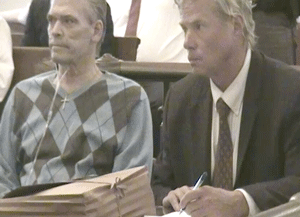
As the verdicts were read by Highland County Clerk of Courts Ike Hodson, Jacobs adjusted valves on his oxygen tank, and appeared to take medication, as the victim and his family members hugged in the courtroom gallery.
After the jury was excused, Highland County Common Pleas Court Judge Rocky Coss said that he wanted the attorneys to look into statues regarding the sentencing, and whether or not the sentences for the felonies assault charge and aggravated burglary charge, and the gun specification could be merged.
Coss said his preliminary interpretation of the statute is that they would not merge. He set a sentencing hearing for Friday at 1:30 p.m. He continued house arrest for Jacobs, and warned him that if he failed to appear for sentencing he could face an indictment on additional charges.
Highland County Prosecutor Anneka aid that she was "pleased with the verdict, and to get some justice for Jonathan. The (Hillsboro Police Department) did an excellent job."
Defense attorney Jim Boulger declined to comment until after sentencing, but did say there would "certainly be an appeal."
Both Harris and Jacobs testified during the two-day trial and told jurors their version of the events that are alleged to have taken place.
While on the stand, Jacobs said he felt like Harris was a son to him, prior to the incident, and that he never meant to hurt him, but he did want to threaten him because he felt his wife was in danger.
The state, represented by Anneka Collins, alleged that Jacobs entered Harris's residence at 63 Belfast Pike, without permission, pulled out a gun and shot him.
The defense alleged that Harris had threatened Jacobs and his then-wife over the phone. Jacobs confronted Harris, and according to Boulger, Harris is the one who pulled the gun. Jacobs struck out at the gun with his cane, lost his balance and fell on top of Harris, causing the gun to go off.
As a result of the shooting, Harris lost one of his eyes and suffered severe facial injuries.
Boulger told the jury on Thursday that ultimately, "it is a question of credibility between these two guys."
Collins told the jury that the situation was like the tale of the moneylender in Shakespeare's play "The Merchant of Venice" in which the character Shylock the moneylender took "a pound of flesh" from Antonio over an unpaid loan.
"In our play, Shylock is the defendant and Antonio is Jonathan Harris," Collins said.
Prior to the start of court Thursday, Judge Coss denied a motion by the defense to allow certain testimony from Jacobs regarding the victim's alleged drug use and mental health. Boulger has asserted that Jacobs says he saw drugs in the victim's apartment and that is why he wanted immediate repayment of the loan. Coss said that line of questioning was only to discredit the victim as a witness and calling a victim's character into question was not a defense.
In his closing statements, Boulger told the jury that a large piece of the puzzle was missing and told them to ask themselves why Jacobs would suddenly feel the need to have a confrontation with a man he said he felt a father/son relationship toward.
"The state would have you believe Mr. Jacobs was a mad dog," Boulger said.
Boulger asked the jury to look at the evidence and consider that there might be more to the picture.
When Jacobs took the stand in his own defense, he had to be helped to the witness chair by his attorney, as he walked with the assistance of a walker and utilized an oxygen tank on wheels.
Jacobs told the jury that he had seen Harris earlier in the day on Dec. 15, 2010, and that Harris had paid him $200 toward the $2,000 he had. When he gave him the money, Jacobs said, he was very friendly, and they hugged afterward.
"He said, 'Man, I love you.' I said, 'I love you too.'"
Later that evening, according to Jacobs, Harris called him and threatened his life and the life of Jacobs's then-wife, Theresa. Jacobs said that he called his wife, who was in St. Louis, Mo. at the time, and told her not to come home.
Jacobs said he then went across the street to talk to Harris about what had happened. When he reached the apartment, which is located inside J and J Automotive, he said that he knocked and Harris told him to come in.
"I got very close to him. I wanted to be as threatening as possible," Jacobs said. "I wanted him to know that he could not threaten my wife. The next thing I know, there's a gun in his hand."
Jacobs said that Harris had the gun in his right hand, a cell phone in his left hand. The defendant testified that he had a cane in his right hand, and he struck Harris's right arm with the cane. He lost his balance, and the two fell to the floor. As they were falling to the floor, Jacobs said he heard the gun go off once, and that he landed on top of Harris.
"I was pretty frightened. I went straight back home," Jacobs said.
The Hillsboro Police Department arrived shortly after, and they took Jacobs into custody.
Jacobs said that when police arrived at his door that it was "a relief" but that he didn't let them enter his house.
Members of the HPD testified Wednesday that Jacobs had confessed to shooting Harris, and that he had given the weapon, which belonged to his wife, "to a friend" and that it was two states away and would never be found.
Jacobs told the jury that he never confessed to shooting Harris, but that he had given the officers "scenarios" about what might have happened that day. He said that he didn't tell them that he shot Harris, but that they may have "misconstrued" what he said.
On cross examination, Collins asked if he got any blood on him, and Jacobs said that he didn't have blood on him. Collins asked how that was possible since he had testified that he landed on top of Harris, who has sustained a gunshot wound to the head. She asked if he saw any blood.
"I didn't notice," Jacobs said.
"You left him to die. You wanted him to die?" Collins asked.
"That's the last thing in the world I would want for anyone," Jacobs said.
Collins asked Jacobs why he didn't call 911 and Jacobs said, "You don't want that answer."
Collins repeated the question, and Jacobs repeated, "You don't want that answer."
On redirect examination, Boulger asked the same question, and Jacobs testified that he had experience in which police did not show up to make a report when he called them.
Jacobs told Collins that he never confessed to shooting Harris.
"So two seasoned officers of the law made up a confession?" Collins asked.
"I would have to say yes," Jacobs said. "I wish to God there was a tape or a video."
"I do too," Collins said.
Collins questioned Jacobs' motivations on why he went to Harris's apartment.
"You testified that you wanted to be threatening," Collins said.
"When it comes to my wife, hell yes I did," Jacobs said.
Prior to Jacobs taking the stand, Theresa Jacobs testified. She answered two questions on the stand, telling jurors her name and that she was the defendant's wife. Coss asked that the jury be removed from the courtroom, and he then told the witness that within the past month he had signed a divorce decree from them. He told Theresa Jacobs that he did not want any attempt at misleading the jury and that she was to tell the truth.
"Absolutely," Jacobs said.
While cross examining the defendant, Collins clarified the relationship, saying, "Every time you say 'wife' you mean ex-wife."
"In my heart she'll always be my wife," Jacobs said.
Theresa Jacobs testified that she still resides part-time with her ex-husband and that they divorced in 2011 after 18 years of marriage.
Collins asked the defendant if they had transferred all property to Theresa Jacobs' name because there was a civil suit pending between the Jacobs and Harris. Jacobs said that was not true.
Throughout the trial, Collins asked witnesses if during December 2010 the defendant had used a walker or oxygen, and they said no. Several other witnesses had testified that they had seen Jacobs working in his yard over the summer without the aid of a walker or cane and without the use of oxygen. He told the jury that he had suffered a heart attack and a stroke and kidney failure, which made him rely on the oxygen.
On cross examination, Collins asked Jacobs if he smoked, and he said that he did. She asked if he smoked with oxygen tubes up his nose. At first Jacobs said that he did not, and Collins asked if prior to the assembly of court that day if a courthouse employee had asked him to move away from the courthouse because he was smoking with the oxygen tank. Jacobs said he had been smoking, but "the tank wasn't on."
In addition to the defendant and his ex-wife, Debbie Rogers, who lived in the same building as Harris in December 2010, testified regarding Harris's character. She testified that he was an untruthful person and she avoided him as much as possible.
The jury was cleared from the courtroom while a fourth witness, Joshua Stevens, took the stand. Boulger questioned him on whether or not he had witnessed Mark Puckett give Harris a gun. Stevens said that he had not. Boulger stated that the court had recordings of Stevens saying that he had witnessed such an event. Coss told Boulger that he could not impeach his own witness and excused Stevens.
Boulger submitted to the court a proffer, which is when testimony is excluded, but an attorney wants to offer it into evidence. He also submitted a proffer on Harris's alleged history with weapons, saying that Harris had previously been shot by law enforcement officials in Xenia after he allegedly pulled a rifle on them.
The jury began deliberating the case at approximately 1:45 p.m.
A jury in Highland County Common Pleas Court deliberated for just over five hours Thursday before returning a not guilty verdict on an attempted murder charge; and guilty verdicts on charges of second-degree felonious assault and aggravated burglary.
Jimmie Jacobs, 65, was indicted in March on one count of attempted murder with a gun specification, a felony of the first degree; one count of felonious assault with a gun specification, a felony of the second degree; and one count of aggravated burglary with a gun specification, a felony of the first degree.
Jacobs had been accused of shooting his 28-year-old neighbor Jonathan Harris on Dec. 15, 2010 with a high-caliber handgun after they allegedly had a disagreement over the repayment of a $2,000 loan Jacobs made to Harris.
As the verdicts were read by Highland County Clerk of Courts Ike Hodson, Jacobs adjusted valves on his oxygen tank, and appeared to take medication, as the victim and his family members hugged in the courtroom gallery.
After the jury was excused, Highland County Common Pleas Court Judge Rocky Coss said that he wanted the attorneys to look into statutes regarding the sentencing, and whether or not the sentences for the felonies assault charge and aggravated burglary charge, and the gun specification could be merged.
Coss said his preliminary interpretation of the statute is that they would not merge. He set a sentencing hearing for Friday at 1:30 p.m. He continued house arrest for Jacobs, and warned him that if he failed to appear for sentencing he could face an indictment on additional charges.
Highland County Prosecutor Anneka Collins said that she was "pleased with the verdict, and to get some justice for Jonathan. The (Hillsboro Police Department) did an excellent job."
Defense attorney Jim Boulger declined to comment until after sentencing, but did say there would "certainly be an appeal."
Both Harris and Jacobs testified during the two-day trial and told jurors their version of the events that are alleged to have taken place.
While on the stand, Jacobs said he felt like Harris was a son to him, prior to the incident, and that he never meant to hurt him, but he did want to threaten him because he felt his wife was in danger.
The state, represented by Anneka Collins, alleged that Jacobs entered Harris's residence at 63 Belfast Pike, without permission, pulled out a gun and shot him.
The defense alleged that Harris had threatened Jacobs and his then-wife over the phone. Jacobs confronted Harris, and according to Boulger, Harris is the one who pulled the gun. Jacobs struck out at the gun with his cane, lost his balance and fell on top of Harris, causing the gun to go off.
As a result of the shooting, Harris lost one of his eyes and suffered severe facial injuries.
Boulger told the jury on Thursday that ultimately, "it is a question of credibility between these two guys."
Collins told the jury that the situation was like the tale of the moneylender in Shakespeare's play "The Merchant of Venice" in which the character Shylock the moneylender took "a pound of flesh" from Antonio over an unpaid loan.
"In our play, Shylock is the defendant and Antonio is Jonathan Harris," Collins said.
Prior to the start of court Thursday, Judge Coss denied a motion by the defense to allow certain testimony from Jacobs regarding the victim's alleged drug use and mental health. Boulger has asserted that Jacobs says he saw drugs in the victim's apartment and that is why he wanted immediate repayment of the loan. Coss said that line of questioning was only to discredit the victim as a witness and calling a victim's character into question was not a defense.
In his closing statements, Boulger told the jury that a large piece of the puzzle was missing and told them to ask themselves why Jacobs would suddenly feel the need to have a confrontation with a man he said he felt a father/son relationship toward.
"The state would have you believe Mr. Jacobs was a mad dog," Boulger said.
Boulger asked the jury to look at the evidence and consider that there might be more to the picture.
When Jacobs took the stand in his own defense, he had to be helped to the witness chair by his attorney, as he walked with the assistance of a walker and utilized an oxygen tank on wheels.
Jacobs told the jury that he had seen Harris earlier in the day on Dec. 15, 2010, and that Harris had paid him $200 toward the $2,000 he had. When he gave him the money, Jacobs said, he was very friendly, and they hugged afterward.
"He said, 'Man, I love you.' I said, 'I love you too.'"
Later that evening, according to Jacobs, Harris called him and threatened his life and the life of Jacobs's then-wife, Theresa. Jacobs said that he called his wife, who was in St. Louis, Mo. at the time, and told her not to come home.
Jacobs said he then went across the street to talk to Harris about what had happened. When he reached the apartment, which is located inside J and J Automotive, he said that he knocked and Harris told him to come in.
"I got very close to him. I wanted to be as threatening as possible," Jacobs said. "I wanted him to know that he could not threaten my wife. The next thing I know, there's a gun in his hand."
Jacobs said that Harris had the gun in his right hand, a cell phone in his left hand. The defendant testified that he had a cane in his right hand, and he struck Harris's right arm with the cane. He lost his balance, and the two fell to the floor. As they were falling to the floor, Jacobs said he heard the gun go off once, and that he landed on top of Harris.
"I was pretty frightened. I went straight back home," Jacobs said.
The Hillsboro Police Department arrived shortly after, and they took Jacobs into custody.
Jacobs said that when police arrived at his door that it was "a relief" but that he didn't let them enter his house.
Members of the HPD testified Wednesday that Jacobs had confessed to shooting Harris, and that he had given the weapon, which belonged to his wife, "to a friend" and that it was two states away and would never be found.
Jacobs told the jury that he never confessed to shooting Harris, but that he had given the officers "scenarios" about what might have happened that day. He said that he didn't tell them that he shot Harris, but that they may have "misconstrued" what he said.
On cross-examination, Collins asked if he got any blood on him, and Jacobs said that he didn't have blood on him. Collins asked how that was possible since he had testified that he landed on top of Harris, who has sustained a gunshot wound to the head. She asked if he saw any blood.
"I didn't notice," Jacobs said.
"You left him to die. You wanted him to die?" Collins asked.
"That's the last thing in the world I would want for anyone," Jacobs said.
Collins asked Jacobs why he didn't call 911 and Jacobs said, "You don't want that answer."
Collins repeated the question, and Jacobs repeated, "You don't want that answer."
On redirect examination, Boulger asked the same question, and Jacobs testified that he had experience in which police did not show up to make a report when he called them.
Jacobs told Collins that he never confessed to shooting Harris.
"So two seasoned officers of the law made up a confession?" Collins asked.
"I would have to say yes," Jacobs said. "I wish to God there was a tape or a video."
"I do, too," Collins said.
Collins questioned Jacobs' motivations on why he went to Harris's apartment.
"You testified that you wanted to be threatening," Collins said.
"When it comes to my wife, hell yes, I did," Jacobs said.
Prior to Jacobs taking the stand, Theresa Jacobs testified. She answered two questions on the stand, telling jurors her name and that she was the defendant's wife. Coss asked that the jury be removed from the courtroom, and he then told the witness that within the past month he had signed a divorce decree from them. He told Theresa Jacobs that he did not want any attempt at misleading the jury and that she was to tell the truth.
"Absolutely," Jacobs said.
While cross-examining the defendant, Collins clarified the relationship, saying, "Every time you say 'wife' you mean ex-wife."
"In my heart, she'll always be my wife," Jacobs said.
Theresa Jacobs testified that she still resides part-time with her ex-husband and that they divorced in 2011 after 18 years of marriage.
Collins asked the defendant if they had transferred all property to Theresa Jacobs' name because there was a civil suit pending between the Jacobs and Harris. Jacobs said that was not true.
Throughout the trial, Collins asked witnesses if during December 2010 the defendant had used a walker or oxygen, and they said no. Several other witnesses had testified that they had seen Jacobs working in his yard over the summer without the aid of a walker or cane and without the use of oxygen. He told the jury that he had suffered a heart attack and a stroke and kidney failure, which made him rely on the oxygen.
On cross-examination, Collins asked Jacobs if he smoked, and he said that he did. She asked if he smoked with oxygen tubes up his nose. At first Jacobs said that he did not, and Collins asked if prior to the assembly of court that day if a courthouse employee had asked him to move away from the courthouse because he was smoking with the oxygen tank. Jacobs said he had been smoking, but "the tank wasn't on."
In addition to the defendant and his ex-wife, Debbie Rogers, who lived in the same building as Harris in December 2010, testified regarding Harris's character. She testified that he was an untruthful person and she avoided him as much as possible.
The jury was cleared from the courtroom while a fourth witness, Joshua Stevens, took the stand. Boulger questioned him on whether or not he had witnessed Mark Puckett give Harris a gun. Stevens said that he had not. Boulger stated that the court had recordings of Stevens saying that he had witnessed such an event. Coss told Boulger that he could not impeach his own witness and excused Stevens.
Boulger submitted to the court a proffer, which is when testimony is excluded, but an attorney wants to offer it into evidence. He also submitted a proffer on Harris's alleged history with weapons, saying that Harris had previously been shot by law enforcement officials in Xenia after he allegedly pulled a rifle on them.
The jury began deliberating the case at approximately 1:45 p.m.
[[In-content Ad]]