


Defense challenges search warrant, other items in alleged church theft case
Lead Summary
By
Brandy Chandler-brandychandler@gmail.com
A motion to suppress was briefly discussed Wednesday in Highland County Common Pleas Court during a pretrial hearing in the case of former pastor Jim Blaine, accused of stealing more than $100,000 from a Greenfield area church.
The defense is seeking to suppress a warrant used by the Highland County Sheriff's Office to obtain documents and computer files, as well as statements obtained during a Good Shepherd Church board meeting that was recorded by a state's witness.
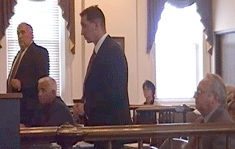
Blaine appeared in Highland County Common Pleas Court, with his attorney Marc Ross, before Judge Rocky Coss. Coss questioned the defense and the state, represented by Jim Grandey and David Henry of the Highland County Prosecutor's Office.
Coss asked Ross if he had filed discovering, and Ross said that he had not, but he was meeting with Blaine July 22 regarding that matter. "I anticipate there probably will not be a lot," Ross said.
Coss ordered that it be filed by July 30. He also noted that a motion to suppress had been filed July 1, and a hearing regarding the defense's motion to suppress will be held Aug. 11. Coss asked if the matter would require an evidentiary hearing, or "if this will be a matter for argument."
Grandey said that he and Ross had been talking regarding the case that that a memorandum contra had been filed Wednesday regarding the motion to suppress.
The defense's motion to suppress focused on four areas, including:
1.) "All evidence obtained directly or indirectly as a result of the execution of the search warrants issued on Oct. 9, 2009 to the Highland County Sheriff's Office, including but not limited to documents, records, computers, computer hard drives and computer files, papers, receipts, notes and/or memoranda."
2.) "Any and all evidence derived from, or obtained as a result of, the unlawfully seized evidence obtained from the executive session of the search warrants issued on Oct. 9, 2009 by the Highland County Sheriff's Office."
3.) "Statements and/or admissions allegedly made by (Blaine) during an October 5, 2009 board meeting of the Good Shepherd Church that was unlawfully recorded by a state's witness with the prior knowledge of the Highland County Sheriff's Office, without a warrant and without the knowledge and consent of the defendant or church board.
3.) Statements and/or admissions allegedly made by (Blaine) in response to questioning by the Highland County Prosecuting Attorney at a bankruptcy court hearing on March 27, 2010 in violation of (Blaine's) rights ..."
Blaine was arrested on April 27, 2010, on one count of theft filed in Highland County Court in Greenfield, when he returned to Ohio from Texas to attend a bankruptcy hearing on a case he initiated. He was indicted in April by a Highland County grand jury on 17 counts, including forgery and aggravated theft.
Grandey said Blaine resigned as pastor of the church last year.
A memorandum suppoting the motion to suppress alleges that a search warrant obtained by the HCSO was for a residence at 1103 Cross Street. When the residence was searched, 1107 Cross Street, a "connected but separate residence" was also searched and items were obtained. Blaine's office and an area outside his office was also searched at the church. Ross argued the searches were out of the scope of the warrant and lacked probable cause.
"As a result of analyzing the items seized from the search warrants, additional records and documents were requested and obtained by the sheriff's office regarding the defendant," according to the memorandum.
A church member, according to the court document, "requested and was provided with a recording device by the Highland County Sheriff's Office's detective so that he could secretly record the private board meeting of the Good Shepherd Church ... (The church member) returned the recording device to the sheriff and turned over the recording to the sheriff's detective."
Ross also wrote that when Blaine was arrested, he was not read his Miranda rights, and his attorney was not notified.
The state argued in the memorandum contra that "each item sought to be suppressed was obtained lawfully and is relevant to the prosecution of the defendant in this case. The search conducted at both the Good Shepherd Church and 1103 Cross Street were done only after the Highland County Sheriff's Office obtained search warrants. Further, while the state does not intend to use the tape of the Good Shepherd board meeting in its case in chief, it asserts its ability to utilize said tape for impeachment and rebuttal purposes. Additionally, the state does not intend to use any admissions or statements disclosed in the defendant's bankruptcy hearing."
In the state's memorandum, Henry wrote that the sheriff's office obtained the address of 1103 Cross Street from the Greenfield Water Department, and the warrant included the parcel number of the property itself. "Defendant utilizes 1103 as his residence, the creation of a separate mailing number, 1107 Cross Street, does not make this search illegal."
The state asserts that the church was searched using a search warrant, and at the time, Blaine had no affiliation with the church as he resigned as pastor Sept. 30, 2009. His letter of resignation was included as an exhibit in the memorandum. "The state would contend the defendant has not standing to contest this warrant."
The state also contends that the tape recording is also not subject to suppression, as it was made by a private person, and that person approached law enforcement.
"In this state," Henry wrote, "the recoding of conversations is legal if one party knows that the recoding is taking place. There was no violation of any meeting laws as the church is not a public department or agency. The church is not subject to the rigors of the state's executive session rules."
During the hearing Wednesday, Grandey told the court the state had shared additional discovery with the defense, including a Power Point presentation they plan on using at trial.
"It appears very likely we will be submitting some stipulations to the court as to the documents that the state plans to introduce," Grandey said.
Ross said that after his discussions with the prosecutor's office, he did not believe that the tape, or the statements made at the bankruptcy hearing would be an issue at trial.
Coss, addressing Ross said, "It appears you are attacking the search warrant based on the memorandum."
Coss said there did not appear to be allegations the affidavit was obtained in a reckless manner, but the motion alleged that the state exceeded the scope of the search warrant, and Ross agreed.
"That would be an evidentiary matter ... Just so you understand, I'm kind of funny as a judge in that I believe in following the law," Coss said. "And the law says you don't have evidentiary hearings on affidavits unless," proper documents are filed. "Just so you know, I do enforce that rule strictly."
An affidavit out of Highland County Court in Greenfield dated April 26, states that (HCSO) Det. Sgt. Daniel Croy said, "in October 2009, Highland County Sheriff's Office received complaints from church board members with the Good Shepherd Church, located at 12920 State Route 28 Greenfield ... The complaints consisted of possible forgeries involving these board members' signatures on bank loan-related records in order to facilitate a theft offense. An investigation was then initiated and through the last seven months records have been obtained from a variety of financial and banking institutions. Upon review of these records, as well as conducting numerous interviews, it was found that from a period starting in January 2004, through December 2009, James A. Blaine obtained money illegally using the Good Shepherd Church name and information. From 2004 to 2009, James A. Blaine took over $100,000 and less than $500,000 beyond the consent and authority of the Good Shepherd Church."
Blaine is next scheduled to appear in court Aug. 11.
A motion to suppress was briefly discussed Wednesday in Highland County Common Pleas Court during a pretrial hearing in the case of former pastor Jim Blaine, accused of stealing more than $100,000 from a Greenfield area church.
The defense is seeking to suppress a warrant used by the Highland County Sheriff's Office to obtain documents and computer files, as well as statements obtained during a Good Shepherd Church board meeting that was recorded by a state's witness.
Blaine appeared in Highland County Common Pleas Court, with his attorney Marc Ross, before Judge Rocky Coss. Coss questioned the defense and the state, represented by Jim Grandey and David Henry of the Highland County Prosecutor's Office.
Coss asked Ross if he had filed discovering, and Ross said that he had not, but he was meeting with Blaine July 22 regarding that matter. "I anticipate there probably will not be a lot," Ross said.
Coss ordered that it be filed by July 30. He also noted that a motion to suppress had been filed July 1, and a hearing regarding the defense's motion to suppress will be held Aug. 11. Coss asked if the matter would require an evidentiary hearing, or "if this will be a matter for argument."
Grandey said that he and Ross had been talking regarding the case and that a memorandum contra had been filed Wednesday regarding the motion to suppress.
The defense's motion to suppress focused on four areas, including:
1.) "All evidence obtained directly or indirectly as a result of the execution of the search warrants issued on Oct. 9, 2009 to the Highland County Sheriff's Office, including but not limited to documents, records, computers, computer hard drives and computer files, papers, receipts, notes and/or memoranda."
2.) "Any and all evidence derived from, or obtained as a result of, the unlawfully seized evidence obtained from the execution of the search warrants issued on Oct. 9, 2009 by the Highland County Sheriff's Office."
3.) "Statements and/or admissions allegedly made by (Blaine) during an October 5, 2009 board meeting of the Good Shepherd Church that was unlawfully recorded by a state's witness with the prior knowledge of the Highland County Sheriff's Office, without a warrant and without the knowledge and consent of the defendant or church board."
3.) "Statements and/or admissions allegedly made by (Blaine) in response to questioning by the Highland County Prosecuting Attorney at a bankruptcy court hearing on March 27, 2010 in violation of (Blaine's) rights ..."
Blaine was arrested on April 27, 2010, on one count of theft filed in Highland County Court in Greenfield, when he returned to Ohio from Texas to attend a bankruptcy hearing on a case he initiated. He was indicted in April by a Highland County grand jury on 17 counts, including forgery and aggravated theft.
Grandey said Blaine resigned as pastor of the church last year.
A memorandum supporting the motion to suppress alleges that a search warrant obtained by the HCSO was for a residence at 1103 Cross Street. When the residence was searched, 1107 Cross Street, a "connected but separate residence" was also searched and items were obtained. Blaine's office and an area outside his office was also searched at the church. Ross argued the searches were out of the scope of the warrant and lacked probable cause.
"As a result of analyzing the items seized from the search warrants, additional records and documents were requested and obtained by the sheriff's office regarding the defendant," according to the memorandum.
A church member, according to the court document, "requested and was provided with a recording device by the Highland County Sheriff's Office's detective so that he could secretly record the private board meeting of the Good Shepherd Church ... (The church member) returned the recording device to the sheriff and turned over the recording to the sheriff's detective."
Ross also wrote that when Blaine was taken into custody, he was not read his Miranda rights, and his attorney was not notified.
The state argued in the memorandum contra that "each item sought to be suppressed was obtained lawfully and is relevant to the prosecution of the defendant in this case. The search conducted at both the Good Shepherd Church and 1103 Cross Street were done only after the Highland County Sheriff's Office obtained search warrants. Further, while the state does not intend to use the tape of the Good Shepherd board meeting in its case in chief, it asserts its ability to utilize said tape for impeachment and rebuttal purposes. Additionally, the state does not intend to use any admissions or statements disclosed in the defendant's bankruptcy hearing."
In the state's memorandum, Henry wrote that the sheriff's office obtained the address of 1103 Cross Street from the Greenfield Water Department, and the warrant included the parcel number of the property itself. "Defendant utilizes 1103 as his residence, the creation of a separate mailing number, 1107 Cross Street, does not make this search illegal."
The state asserts that the church was searched using a search warrant, and at the time, Blaine had no affiliation with the church as he resigned as pastor Sept. 30, 2009. His letter of resignation was included as an exhibit in the memorandum. "The state would contend the defendant has no standing to contest this warrant."
The state also contends that the tape recording is also not subject to suppression, as it was made by a private person, and that person approached law enforcement.
"In this state," Henry wrote, "the recording of conversations is legal if one party knows that the recording is taking place. There was no violation of any meeting laws as the church is not a public department or agency. The church is not subject to the rigors of the state's executive session rules."
During the hearing Wednesday, Grandey told the court the state had shared additional discovery with the defense, including a Power Point presentation they plan on using at trial.
"It appears very likely we will be submitting some stipulations to the court as to the documents that the state plans to introduce," Grandey said.
Ross said that after his discussions with the prosecutor's office, he did not believe that the tape, or the statements made at the bankruptcy hearing would be an issue at trial.
Coss, addressing Ross said, "It appears you are attacking the search warrant based on the affidavit."
Coss said there did not appear to be allegations the affidavit or warrant was obtained in a reckless manner, but the motion alleged that the state exceeded the scope of the search warrant, and Ross agreed.
"That would be an evidentiary matter ... Just so you understand, I'm kind of funny as a judge in that I believe in following the law," Coss said. "And the law says you don't have evidentiary hearings on affidavits unless," proper documents are filed. "Just so you know, I do enforce that rule strictly."
An affidavit out of Highland County Court in Greenfield dated April 26, states that (HCSO) Det. Sgt. Daniel Croy said, "in October 2009, Highland County Sheriff's Office received complaints from church board members with the Good Shepherd Church, located at 12920 State Route 28 Greenfield ... The complaints consisted of possible forgeries involving these board members' signatures on bank loan-related records in order to facilitate a theft offense. An investigation was then initiated and through the last seven months records have been obtained from a variety of financial and banking institutions. Upon review of these records, as well as conducting numerous interviews, it was found that from a period starting in January 2004, through December 2009, James A. Blaine obtained money illegally using the Good Shepherd Church name and information. From 2004 to 2009, James A. Blaine took over $100,000 and less than $500,000 beyond the consent and authority of the Good Shepherd Church."
Blaine is next scheduled to appear in court Aug. 11.