


Former Supreme Court Justice Francis Sweeney dies
Lead Summary
By
-
By BRET CROW
The Ohio Supreme Court
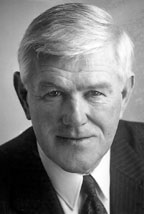
Former Supreme Court of Ohio Justice Francis Edward Sweeney Sr., 77, author of the first DeRolph v. State school funding decision, died Sunday evening.
Justice Sweeney served two terms on the Supreme Court from 1993 to 2004.
Chief Justice Maureen O’Connor, who served with Justice Sweeney for two years at the start of her first term on the Court, said he had the perfect temperament for a judge. “He was fair, he was just and, most importantly, he was consistent and courageous with his judicial philosophy,” she said. “He was a remarkable individual that will truly be missed.”
Perhaps his most significant contribution while a member of the Court was his majority opinion in DeRolph v. State (1997). Justice Sweeney’s opinion described the conditions many students in Ohio’s poorest school districts endured to receive an education. In addition to poor buildings, the school districts often did not have funds to purchase textbooks. Besides these problems, the school districts were so limited financially that they could not offer foreign language, computer courses, music, art, science lab and honors courses. Many students were hampered in their desire to attend college, because they could not take the courses many universities desired for college admission.
He wrote: “Today, Ohio stands at a crossroads. We must decide whether the promise of providing to our youth a free, public elementary and secondary education in a ‘thorough and efficient system’ has been fulfilled. The importance of this case cannot be overestimated. It involves a wholesale constitutional attack on Ohio’s system of funding public elementary and secondary education. Practically every Ohioan will be affected by our decision: the 1.8 million children in the public schools and every taxpayer in the state. For the 1.8 million children involved, this case is about the opportunity to compete and succeed.”
He continued: “We recognize that money alone is not the panacea that will transform Ohio’s school system into a model of excellence. Although a student’s success depends upon numerous factors besides money, we must ensure that there is enough money that students have the chance to succeed because of the educational opportunity provided, not in spite of it. Such an opportunity requires, at the very least, that all of Ohio’s children attend schools, which are safe and conducive to learning. At the present, Ohio does not provide many of its students with even the most basic of educational needs.”
The Supreme Court ruled that Ohio’s system of school funding was unconstitutional. The decision admonished the General Assembly to “create an entirely new school financing system.”
As a result of this decision, the Ohio General Assembly established the Ohio School Facilities Commission in 1997. From 1997 to 2004, more than $3.5 billion was spent to build or renovate 293 school buildings in 124 school districts.
Justice Sweeney was born Jan. 24, 1934, in Cuyahoga County. He graduated from St. Ignatius High School, excelling in football at a school well known for its outstanding football teams. Graduating in 1952, he attended Xavier University in Cincinnati, receiving a bachelor’s degree in 1956. From 1957 to 1958, he served with the U.S. Army in Fort Knox, Ky. In addition, he also played professional football for the Ottawa Rough Riders of the Canadian Football League.
Upon his return to Cleveland, Sweeney enrolled in Cleveland-Marshall Law School at Cleveland State University. At the same time, he worked in the Legal Department of Allstate Insurance Company in Cleveland. In 1963, Sweeney graduated with a law degree.
After the completion of his legal studies, Sweeney became an assistant prosecuting attorney with the Cuyahoga County Prosecutor’s office in Cleveland. The voters of Cuyahoga County elected him judge of the Cuyahoga County Common Pleas Court in 1970.
On Nov. 11, 1987, Judge Sweeney announced he would seek election for judge on the Eighth District Court of Appeals. At the time he said, “I spent seven years as a prosecuting attorney and 18 years on the bench. My experience qualifies me for the job. A higher court is the goal of any trial judge. The progression is natural.”
From 1988 to 1992, he served on the appellate court. In 1992, he was elected to the Supreme Court and re-elected in 1998. Due to the mandatory retirement age of 70, he could not seek re-election in 2004.
Upon his retirement from the Supreme Court, fellow Justice Paul E. Pfeifer wrote a column about his colleague that began like this.
“The true measure of a man is not what people will say about him in public, but rather what they say – or don’t say – about him behind his back. In that regard, Francis Sweeney is an extraordinary man. I have never heard anyone utter a disparaging word about him, and in this business, that is truly remarkable.”
Also in that column, Justice Pfeifer wrote of the philosophy that guided Justice Sweeney’s life and how he summed it up over dinner one night discussing religion.
“You know Paul,” Justice Sweeney said, “there are many indiscretions in this life that are not sins, but the biggest sin of all is not helping your fellow man when you have an opportunity to do so.”
Justice Sweeney continued serving on the bench as a retired assigned judge until last year in Cuyahoga County Common Pleas Court where he presided over asbestos cases.
Justice Sweeney married Lee Marie Yesbak and raised four children.
A wake will be held from 2 to 9 p.m. Wednesday, April 13, at the McGorray-Hanna Funeral Home in Lakewood. Funeral mass will be held at 10 a.m. Thursday, April 14, at St. Luke Catholic Church in Lakewood.[[In-content Ad]]
The Ohio Supreme Court
Former Supreme Court of Ohio Justice Francis Edward Sweeney Sr., 77, author of the first DeRolph v. State school funding decision, died Sunday evening.
Justice Sweeney served two terms on the Supreme Court from 1993 to 2004.
Chief Justice Maureen O’Connor, who served with Justice Sweeney for two years at the start of her first term on the Court, said he had the perfect temperament for a judge. “He was fair, he was just and, most importantly, he was consistent and courageous with his judicial philosophy,” she said. “He was a remarkable individual that will truly be missed.”
Perhaps his most significant contribution while a member of the Court was his majority opinion in DeRolph v. State (1997). Justice Sweeney’s opinion described the conditions many students in Ohio’s poorest school districts endured to receive an education. In addition to poor buildings, the school districts often did not have funds to purchase textbooks. Besides these problems, the school districts were so limited financially that they could not offer foreign language, computer courses, music, art, science lab and honors courses. Many students were hampered in their desire to attend college, because they could not take the courses many universities desired for college admission.
He wrote: “Today, Ohio stands at a crossroads. We must decide whether the promise of providing to our youth a free, public elementary and secondary education in a ‘thorough and efficient system’ has been fulfilled. The importance of this case cannot be overestimated. It involves a wholesale constitutional attack on Ohio’s system of funding public elementary and secondary education. Practically every Ohioan will be affected by our decision: the 1.8 million children in the public schools and every taxpayer in the state. For the 1.8 million children involved, this case is about the opportunity to compete and succeed.”
He continued: “We recognize that money alone is not the panacea that will transform Ohio’s school system into a model of excellence. Although a student’s success depends upon numerous factors besides money, we must ensure that there is enough money that students have the chance to succeed because of the educational opportunity provided, not in spite of it. Such an opportunity requires, at the very least, that all of Ohio’s children attend schools, which are safe and conducive to learning. At the present, Ohio does not provide many of its students with even the most basic of educational needs.”
The Supreme Court ruled that Ohio’s system of school funding was unconstitutional. The decision admonished the General Assembly to “create an entirely new school financing system.”
As a result of this decision, the Ohio General Assembly established the Ohio School Facilities Commission in 1997. From 1997 to 2004, more than $3.5 billion was spent to build or renovate 293 school buildings in 124 school districts.
Justice Sweeney was born Jan. 24, 1934, in Cuyahoga County. He graduated from St. Ignatius High School, excelling in football at a school well known for its outstanding football teams. Graduating in 1952, he attended Xavier University in Cincinnati, receiving a bachelor’s degree in 1956. From 1957 to 1958, he served with the U.S. Army in Fort Knox, Ky. In addition, he also played professional football for the Ottawa Rough Riders of the Canadian Football League.
Upon his return to Cleveland, Sweeney enrolled in Cleveland-Marshall Law School at Cleveland State University. At the same time, he worked in the Legal Department of Allstate Insurance Company in Cleveland. In 1963, Sweeney graduated with a law degree.
After the completion of his legal studies, Sweeney became an assistant prosecuting attorney with the Cuyahoga County Prosecutor’s office in Cleveland. The voters of Cuyahoga County elected him judge of the Cuyahoga County Common Pleas Court in 1970.
On Nov. 11, 1987, Judge Sweeney announced he would seek election for judge on the Eighth District Court of Appeals. At the time he said, “I spent seven years as a prosecuting attorney and 18 years on the bench. My experience qualifies me for the job. A higher court is the goal of any trial judge. The progression is natural.”
From 1988 to 1992, he served on the appellate court. In 1992, he was elected to the Supreme Court and re-elected in 1998. Due to the mandatory retirement age of 70, he could not seek re-election in 2004.
Upon his retirement from the Supreme Court, fellow Justice Paul E. Pfeifer wrote a column about his colleague that began like this.
“The true measure of a man is not what people will say about him in public, but rather what they say – or don’t say – about him behind his back. In that regard, Francis Sweeney is an extraordinary man. I have never heard anyone utter a disparaging word about him, and in this business, that is truly remarkable.”
Also in that column, Justice Pfeifer wrote of the philosophy that guided Justice Sweeney’s life and how he summed it up over dinner one night discussing religion.
“You know Paul,” Justice Sweeney said, “there are many indiscretions in this life that are not sins, but the biggest sin of all is not helping your fellow man when you have an opportunity to do so.”
Justice Sweeney continued serving on the bench as a retired assigned judge until last year in Cuyahoga County Common Pleas Court where he presided over asbestos cases.
Justice Sweeney married Lee Marie Yesbak and raised four children.
A wake will be held from 2 to 9 p.m. Wednesday, April 13, at the McGorray-Hanna Funeral Home in Lakewood. Funeral mass will be held at 10 a.m. Thursday, April 14, at St. Luke Catholic Church in Lakewood.[[In-content Ad]]