


40th annual HCSCA telethon airs March 28
Lead Summary
By
Brandy Chandler-brandychandler@gmail.com
In the last 40 years, the Highland County Society for Children and Adults has assisted thousands of families and individuals who struggle to pay the costs of medical treatment not covered by insurance or other services. As the organization’s annual fundraising telethon approaches, one Highland County family says that the society has been able to, in particular, change the life of an 8-year-old boy with each step that he takes.
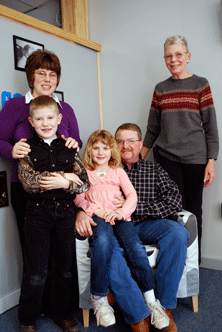
Thomas Fraysier, a third-grader at Bright Local Elementary School, is the 2012 poster child for the annual telethon. Thomas said that playing his Nintendo DS, riding his four-wheeler, hunting, and going to church are among his favorite things to do.
Though he is active and energetic, and loves to be outside, those activities could be challenging for him, until a few months ago when everything changed.
“We found out when he was 22 months old, that he’d had a stroke in utero,” said his mother, Jennifer Fraysier.
“He started wearing a brace when he was 24 months. We noticed there was a problem when he started walking. He didn’t walk until he was 16 months old, and he kept his right hand in a fist.”
Thomas has been receiving treatment for as long as he can remember, and since his diagnosis has had 174 visits to the clinic and 108 therapy visits. But a family trip last summer had a big impact on treatment, and how Thomas would eventually walk, when they were introduced to an experimental device designed to give him better control over his leg.
“We went to a retreat in Florence, Alabama for kids who had had strokes,” Jennifer said. “It’s the first time we have gone to a retreat. There was a lady there who did a presentation on the walk aid. We tried it right there, that day, and he really liked it. He liked the fact that he wasn’t going to have to wear a brace, and could wear any shoe.”
Prior to receiving the aid, Thomas had to wear a brace and a shoe that was two sizes larger than his normal size, causing him to trip a lot.
Thomas, who was joined on the trip by his mom, his father James, and little sister Emma, was eager to see if the aid could change the way he used his leg.
“It shocked me,” Thomas said. “It felt weird. It was kind of scary, but I like it better than the brace.”
The walk aid is an electrical device that is worn in a cuff on the leg with electrodes that attach.
“They stick to his leg and shock the nerve endings that control the lift of your foot,” James said.
The aid is commonly used with patients with multiple sclerosis. The muscles in his leg can get very tight, which makes him walk on his tiptoes.
“(The device) helps keep the muscles stretched out, so he doesn’t have to have as much therapy,” James said. “What I don’t understand about insurance companies is that they say it’s experimental. But the company will let you try it and see if it works for you before they sell it to you.”
Thomas received the device in December, and the difference was almost immediate. The device is supposed to last five to seven years; however, because it strengthens his ability to utilize his leg, it can also function as a treatment.
“We’re hoping that by the time he needs another one, he won’t need it,” Jennifer said.
In the few months since he has been utilizing the aid, Thomas’ parents can see a big change.
“He’s more confident,” James said. “Building his confidence is something that is important to us. He doesn’t trip and fall, and he was very conscious about that. That side of his brain is dead from the stroke, so it’s like it doesn’t know he has a right side to his body because there’s no brain activity to it.”
Gayle Coss, the director for the Highland County Society for Children and Adults said that they were glad to help the family purchase the aid.
“We are so happy when we can help, especially when you think about all that he has been through in his short life,” Coss said.
Thomas said that boots are now his favorite shoes to wear, especially the ones with camouflage designs that match his hunting coat.
“After the retreat, we questioned the doctors at Children’s Hospital (in Cincinnati) about it,” Jennifer said. “The doctors said the reason they don’t advertise it is because it’s so new and it’s so expensive – more than $5,000 – and most families can’t afford it. Most people aren’t as blessed as we are, to have an organization like we do in our county to help you out.”
Considered an experimental treatment by insurance companies, the Fraysiers had to pay for it out-of-pocket. While 2011 was the first year the Fraysier family has utilized the services of the society, they have long been contributors to their cause. Jennifer, an educator at Bright Elementary, has organized the penny drive for students to raise funds for the society for approximately six years.
“We’ve never had to use it before,” Jennifer said. “We always knew about it, but we’ve never needed it. We always had the finances before.”
Although the Fraysier family paid the majority of the cost, the society contributed to the expense.
But the results have been worth it, they said. The years of therapy have helped Thomas to gain better use of his arm and hand, and he looks like a healthy 8-year-old. With the use of the walk aid, he now walks with only a slight limp.
Coss said that over the years the number of people who have sought the society’s assistance has increased. However, the increased need is unfortunately coupled with a diminished capacity for people to donate, due to the economy, she said.
“Right now, there are so many people who have worked for years and years, and they had insurance, but now they don’t have insurance to pay for their medications. They have no idea how much their medications cost. A lot of people call me, and they are really distraught, because they didn’t know their medication cost $800.”
The telethon is the one fundraiser and primary source of income for the organization that has had an impact on thousands of lives over the last 40 years.
“Our contributions have gone down four years in a row,” Coss said. “We were amazed that our telethon total was what it was last year, at $120,000.”
The society has had to limit dollar amounts they can donate to individuals to help try and stretch out the funds they have. Coss said they want to help as many people as possible, and contribute toward medications, equipment, gas vouchers, and other expenses that are not always covered by insurance.
“As far as we know, this is the only organization like this in the state,” Coss said. “It is Rotary-sponsored, and has been recognized by the district and Rotary International. Whenever we talk to people from other districts, they say they have never heard of anything else like this.”
The telethon will once again be hosted by Ernie Blankenship, and his co-emcee will be Rick Williams, along with a panel of Rotarians answering phones and taking donations. It can be viewed on the public access television stations in Hillsboro and Greenfield.
Jennifer said that Thomas has come such a long way, and their family is grateful that with the society, they were able to take his therapy to a different level.
“We think it is an honor for him to be asked to be the poster child. It is amazing to look at him now,” Jennifer said.
“When he was younger, he couldn’t use his hand at all. He would drool, he limped really badly when he walked, and he wouldn’t go to sleep. His sensory input was really affected. He had to sleep with a weighted blanket. To look at him now, you would never know. And he just has a wonderful personality.”
The 40th annual telethon will be held March 28 from 6-10 p.m. at NCB in Hillsboro, and from 6-9 p.m. at McClain High School in Greenfield.[[In-content Ad]]
Thomas Fraysier, a third-grader at Bright Local Elementary School, is the 2012 poster child for the annual telethon. Thomas said that playing his Nintendo DS, riding his four-wheeler, hunting, and going to church are among his favorite things to do.
Though he is active and energetic, and loves to be outside, those activities could be challenging for him, until a few months ago when everything changed.
“We found out when he was 22 months old, that he’d had a stroke in utero,” said his mother, Jennifer Fraysier.
“He started wearing a brace when he was 24 months. We noticed there was a problem when he started walking. He didn’t walk until he was 16 months old, and he kept his right hand in a fist.”
Thomas has been receiving treatment for as long as he can remember, and since his diagnosis has had 174 visits to the clinic and 108 therapy visits. But a family trip last summer had a big impact on treatment, and how Thomas would eventually walk, when they were introduced to an experimental device designed to give him better control over his leg.
“We went to a retreat in Florence, Alabama for kids who had had strokes,” Jennifer said. “It’s the first time we have gone to a retreat. There was a lady there who did a presentation on the walk aid. We tried it right there, that day, and he really liked it. He liked the fact that he wasn’t going to have to wear a brace, and could wear any shoe.”
Prior to receiving the aid, Thomas had to wear a brace and a shoe that was two sizes larger than his normal size, causing him to trip a lot.
Thomas, who was joined on the trip by his mom, his father James, and little sister Emma, was eager to see if the aid could change the way he used his leg.
“It shocked me,” Thomas said. “It felt weird. It was kind of scary, but I like it better than the brace.”
The walk aid is an electrical device that is worn in a cuff on the leg with electrodes that attach.
“They stick to his leg and shock the nerve endings that control the lift of your foot,” James said.
The aid is commonly used with patients with multiple sclerosis. The muscles in his leg can get very tight, which makes him walk on his tiptoes.
“(The device) helps keep the muscles stretched out, so he doesn’t have to have as much therapy,” James said. “What I don’t understand about insurance companies is that they say it’s experimental. But the company will let you try it and see if it works for you before they sell it to you.”
Thomas received the device in December, and the difference was almost immediate. The device is supposed to last five to seven years; however, because it strengthens his ability to utilize his leg, it can also function as a treatment.
“We’re hoping that by the time he needs another one, he won’t need it,” Jennifer said.
In the few months since he has been utilizing the aid, Thomas’ parents can see a big change.
“He’s more confident,” James said. “Building his confidence is something that is important to us. He doesn’t trip and fall, and he was very conscious about that. That side of his brain is dead from the stroke, so it’s like it doesn’t know he has a right side to his body because there’s no brain activity to it.”
Gayle Coss, the director for the Highland County Society for Children and Adults said that they were glad to help the family purchase the aid.
“We are so happy when we can help, especially when you think about all that he has been through in his short life,” Coss said.
Thomas said that boots are now his favorite shoes to wear, especially the ones with camouflage designs that match his hunting coat.
“After the retreat, we questioned the doctors at Children’s Hospital (in Cincinnati) about it,” Jennifer said. “The doctors said the reason they don’t advertise it is because it’s so new and it’s so expensive – more than $5,000 – and most families can’t afford it. Most people aren’t as blessed as we are, to have an organization like we do in our county to help you out.”
Considered an experimental treatment by insurance companies, the Fraysiers had to pay for it out-of-pocket. While 2011 was the first year the Fraysier family has utilized the services of the society, they have long been contributors to their cause. Jennifer, an educator at Bright Elementary, has organized the penny drive for students to raise funds for the society for approximately six years.
“We’ve never had to use it before,” Jennifer said. “We always knew about it, but we’ve never needed it. We always had the finances before.”
Although the Fraysier family paid the majority of the cost, the society contributed to the expense.
But the results have been worth it, they said. The years of therapy have helped Thomas to gain better use of his arm and hand, and he looks like a healthy 8-year-old. With the use of the walk aid, he now walks with only a slight limp.
Coss said that over the years the number of people who have sought the society’s assistance has increased. However, the increased need is unfortunately coupled with a diminished capacity for people to donate, due to the economy, she said.
“Right now, there are so many people who have worked for years and years, and they had insurance, but now they don’t have insurance to pay for their medications. They have no idea how much their medications cost. A lot of people call me, and they are really distraught, because they didn’t know their medication cost $800.”
The telethon is the one fundraiser and primary source of income for the organization that has had an impact on thousands of lives over the last 40 years.
“Our contributions have gone down four years in a row,” Coss said. “We were amazed that our telethon total was what it was last year, at $120,000.”
The society has had to limit dollar amounts they can donate to individuals to help try and stretch out the funds they have. Coss said they want to help as many people as possible, and contribute toward medications, equipment, gas vouchers, and other expenses that are not always covered by insurance.
“As far as we know, this is the only organization like this in the state,” Coss said. “It is Rotary-sponsored, and has been recognized by the district and Rotary International. Whenever we talk to people from other districts, they say they have never heard of anything else like this.”
The telethon will once again be hosted by Ernie Blankenship, and his co-emcee will be Rick Williams, along with a panel of Rotarians answering phones and taking donations. It can be viewed on the public access television stations in Hillsboro and Greenfield.
Jennifer said that Thomas has come such a long way, and their family is grateful that with the society, they were able to take his therapy to a different level.
“We think it is an honor for him to be asked to be the poster child. It is amazing to look at him now,” Jennifer said.
“When he was younger, he couldn’t use his hand at all. He would drool, he limped really badly when he walked, and he wouldn’t go to sleep. His sensory input was really affected. He had to sleep with a weighted blanket. To look at him now, you would never know. And he just has a wonderful personality.”
The 40th annual telethon will be held March 28 from 6-10 p.m. at NCB in Hillsboro, and from 6-9 p.m. at McClain High School in Greenfield.[[In-content Ad]]