


Clarence Graham, 1931-2020: Remembering a titan in the newspaper profession
Lead Summary
By
Rory Ryan-hcpress@cinci.rr.com
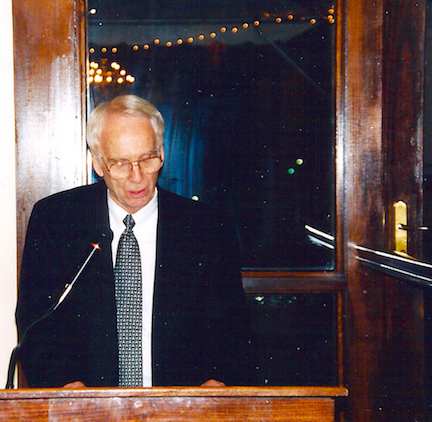
The newspaper profession lost a titan this week. Clarence Graham, a longtime publisher of The Wilmington (Ohio) News-Journal during its Brown Publishing heyday, passed away Dec. 28 at Miami Valley Hospital. He was 89.
I met Clarence Graham in the summer of 1990 at a bar and restaurant in Washington Court House. Three area newspapers were meeting to discuss a weekly football tab for the now-defunct South Central Ohio League, that included Jim Horne's Hillsboro Indians and Otis Wagner's McClain Tigers.
Former publisher Phil Roberts and I rode together from Hillsboro to Court House. Along the way, Phil told me that among all Brown Publishing publishers, he had the greatest respect for Clarence Graham's editorial judgment. As a young sports editor, I simply put that information in my memory bank in case I might need it later on. I did.
Four years later, I was a year removed from covering high school, college and pro sports. I had rejoined Phil as his editor. Two things from late 1994 (perhaps a little later on one of the two) that I recall.
Sometime in October 1994 (if memory serves), Vice President Dan Quayle was in Hillsboro. In covering the event, I'd managed to land in a front-page photo in The Cincinnati Post. The only reason I was in the photo was due to my ignorance. The state and national "press gaggle" at the Wooden Spoon Restaurant had assembled in an area opposite the vice president.
Not knowing my rightful place, I simply walked up to the closest SS man, stopped short, and started taking photos with the old Pentax K1000 35 mm camera.
The next day, two gentlemen with surnames of Graham called me. The first was my father-in-law, Jim Graham of Cincinnati. He asked what in the (world) I was doing in The Cincinnati Post. I had no answer. Later, Clarence (no known relation to Jim) explained to me what a press gaggle looked like. We both had a good laugh.
Another – much more serious – incident occurred not long after my October Surprise story on Dan Quayle's visit to Highland County.
For background, in November 1990 the Ohio Revised Code was updated to include Section 2901.06 "Battered woman syndrome evidence."
The Ohio General Assembly declared that it recognizes both of the following, in relation to the "battered woman syndrome:"
(1) That the syndrome currently is a matter of commonly accepted scientific knowledge;
(2) That the subject matter and details of the syndrome are not within the general understanding or experience of a person who is a member of the general populace and are (sic) not within the field of common knowledge.
(B) If a person is charged with an offense involving the use of force against another and the person, as a defense to the offense charged, raises the affirmative defense of self-defense, the person may introduce expert testimony of the "battered woman syndrome" and expert testimony that the person suffered from that syndrome as evidence to establish the requisite belief of an imminent danger of death or great bodily harm that is necessary, as an element of the affirmative defense, to justify the person's use of the force in question."
This came about due to a 1990 murder case in which a woman shot her husband while he slept. The Ohio Supreme Court first recognized the battered-woman syndrome as a defense in a criminal case. In that case, State v. Koss, Brenda Koss and a number of other witnesses testified about Michael Koss’ ongoing abusive behavior toward her.
Fast-forward a few years, and Highland County had its first battered-woman syndrome case. Phil Roberts and I had long discussions about what stance the newspaper ought to take. For the record, I also spoke with then-county prosecutor and now Judge Rocky Coss prior to publishing. I wrote the first of several editorial drafts. Phil read them. After a few edits, Phil said I needed to fax our final draft to Clarence Graham. (This was before email.)
Clarence did not change a word. Instead, he called me. We went over every sentence, slowly and carefully. I still recall that he did not like my choice of the modifier "unfortunate" to describe the incident. "It's more than that," Clarence said.
From the best that I recall, what we settled on was that this legal defense should be rare. It should not become something taken lightly – and I am not implying that it was taken lightly, after speaking with the prosecutor.
Clarence and I served together on the first Brown Publishing Company Editorial Excellence Committee a quarter of a century ago. One thing I learned from those meetings was this: If Clarence was in the room, one had better bring his A game.
We used to place several of the company newspapers' Page 1 layouts on display and critique them. One former editor (who shall remain nameless, unless he wants to weigh in) had just printed a front page without a single photo (or "art," as they say) on the page. I still remember that page: Three six-column headlines above three 35-inch stories. I doubt it ever happened again.
When Clarence Graham spoke, it was wise to listen. He did not mince words. He did not waste words. He had an economy of style when it came to writing, especially so in his signature column on the Opinion Page. Readers appreciated it, too.
Phil Roberts once told me that walking around Wilmington with Clarence was like walking with the town's best friend. "Everyone in Wilmington knew Clarence," Phil said. "People passing by or driving by, they all waved and had a good word or two for Clarence."
In his obituary at Littleton Funeral Home, a portion of Clarence's 1998 farewell column announcing his retirement is shared.
"I would like for you to think that all newspaper people are not hard core with no conscience," Clarence wrote. "Stories that had to run, though it sometimes brought problems and heartaches to others, bothered me, too. It was often not easy. There is little choice when you choose to write and edit a newspaper. There is a job to do and freedom of the press is something that should continue. It keeps government accountable for its actions. It keeps us all accountable."
Well said, my friend and mentor.
I was honored to attend Clarence Graham's retirement celebration in 1998. In fact, he was the last publisher to leave BPC with a farewell celebration.
After he retired, former Congressman Clarence J. "Bud" Brown convinced Clarence to help oversee some of the editorial content and design across the company's newspapers. Clarence visited me at The People's Defender around 1999 or 2000. He sat down in the office and said "Let's go have some lunch. If you don't know what you're doing by now, I can't help you."
We both had a great laugh. Clarence Graham was a major influence on my first decade in this business. Two decades later, he still is.
Yes, indeed, Clarence Graham was the titan of southern Ohio newspapermen. Godspeed.
Rory Ryan is publisher and owner of The Highland County Press.
(For more information, visit https://www.littletonfuneralhome.com/.)
I met Clarence Graham in the summer of 1990 at a bar and restaurant in Washington Court House. Three area newspapers were meeting to discuss a weekly football tab for the now-defunct South Central Ohio League, that included Jim Horne's Hillsboro Indians and Otis Wagner's McClain Tigers.
Former publisher Phil Roberts and I rode together from Hillsboro to Court House. Along the way, Phil told me that among all Brown Publishing publishers, he had the greatest respect for Clarence Graham's editorial judgment. As a young sports editor, I simply put that information in my memory bank in case I might need it later on. I did.
Four years later, I was a year removed from covering high school, college and pro sports. I had rejoined Phil as his editor. Two things from late 1994 (perhaps a little later on one of the two) that I recall.
Sometime in October 1994 (if memory serves), Vice President Dan Quayle was in Hillsboro. In covering the event, I'd managed to land in a front-page photo in The Cincinnati Post. The only reason I was in the photo was due to my ignorance. The state and national "press gaggle" at the Wooden Spoon Restaurant had assembled in an area opposite the vice president.
Not knowing my rightful place, I simply walked up to the closest SS man, stopped short, and started taking photos with the old Pentax K1000 35 mm camera.
The next day, two gentlemen with surnames of Graham called me. The first was my father-in-law, Jim Graham of Cincinnati. He asked what in the (world) I was doing in The Cincinnati Post. I had no answer. Later, Clarence (no known relation to Jim) explained to me what a press gaggle looked like. We both had a good laugh.
Another – much more serious – incident occurred not long after my October Surprise story on Dan Quayle's visit to Highland County.
For background, in November 1990 the Ohio Revised Code was updated to include Section 2901.06 "Battered woman syndrome evidence."
The Ohio General Assembly declared that it recognizes both of the following, in relation to the "battered woman syndrome:"
(1) That the syndrome currently is a matter of commonly accepted scientific knowledge;
(2) That the subject matter and details of the syndrome are not within the general understanding or experience of a person who is a member of the general populace and are (sic) not within the field of common knowledge.
(B) If a person is charged with an offense involving the use of force against another and the person, as a defense to the offense charged, raises the affirmative defense of self-defense, the person may introduce expert testimony of the "battered woman syndrome" and expert testimony that the person suffered from that syndrome as evidence to establish the requisite belief of an imminent danger of death or great bodily harm that is necessary, as an element of the affirmative defense, to justify the person's use of the force in question."
This came about due to a 1990 murder case in which a woman shot her husband while he slept. The Ohio Supreme Court first recognized the battered-woman syndrome as a defense in a criminal case. In that case, State v. Koss, Brenda Koss and a number of other witnesses testified about Michael Koss’ ongoing abusive behavior toward her.
Fast-forward a few years, and Highland County had its first battered-woman syndrome case. Phil Roberts and I had long discussions about what stance the newspaper ought to take. For the record, I also spoke with then-county prosecutor and now Judge Rocky Coss prior to publishing. I wrote the first of several editorial drafts. Phil read them. After a few edits, Phil said I needed to fax our final draft to Clarence Graham. (This was before email.)
Clarence did not change a word. Instead, he called me. We went over every sentence, slowly and carefully. I still recall that he did not like my choice of the modifier "unfortunate" to describe the incident. "It's more than that," Clarence said.
From the best that I recall, what we settled on was that this legal defense should be rare. It should not become something taken lightly – and I am not implying that it was taken lightly, after speaking with the prosecutor.
Clarence and I served together on the first Brown Publishing Company Editorial Excellence Committee a quarter of a century ago. One thing I learned from those meetings was this: If Clarence was in the room, one had better bring his A game.
We used to place several of the company newspapers' Page 1 layouts on display and critique them. One former editor (who shall remain nameless, unless he wants to weigh in) had just printed a front page without a single photo (or "art," as they say) on the page. I still remember that page: Three six-column headlines above three 35-inch stories. I doubt it ever happened again.
When Clarence Graham spoke, it was wise to listen. He did not mince words. He did not waste words. He had an economy of style when it came to writing, especially so in his signature column on the Opinion Page. Readers appreciated it, too.
Phil Roberts once told me that walking around Wilmington with Clarence was like walking with the town's best friend. "Everyone in Wilmington knew Clarence," Phil said. "People passing by or driving by, they all waved and had a good word or two for Clarence."
In his obituary at Littleton Funeral Home, a portion of Clarence's 1998 farewell column announcing his retirement is shared.
"I would like for you to think that all newspaper people are not hard core with no conscience," Clarence wrote. "Stories that had to run, though it sometimes brought problems and heartaches to others, bothered me, too. It was often not easy. There is little choice when you choose to write and edit a newspaper. There is a job to do and freedom of the press is something that should continue. It keeps government accountable for its actions. It keeps us all accountable."
Well said, my friend and mentor.
I was honored to attend Clarence Graham's retirement celebration in 1998. In fact, he was the last publisher to leave BPC with a farewell celebration.
After he retired, former Congressman Clarence J. "Bud" Brown convinced Clarence to help oversee some of the editorial content and design across the company's newspapers. Clarence visited me at The People's Defender around 1999 or 2000. He sat down in the office and said "Let's go have some lunch. If you don't know what you're doing by now, I can't help you."
We both had a great laugh. Clarence Graham was a major influence on my first decade in this business. Two decades later, he still is.
Yes, indeed, Clarence Graham was the titan of southern Ohio newspapermen. Godspeed.
Rory Ryan is publisher and owner of The Highland County Press.
(For more information, visit https://www.littletonfuneralhome.com/.)