


Supporting veterans following military service
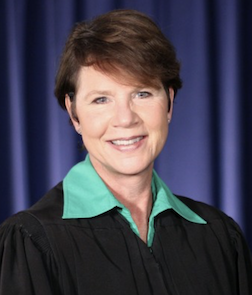
Chief Justice Sharon L. Kennedy
By Sharon L. Kennedy
Chief Justice
Ohio Supreme Court
When veterans walk through the doors of a correctional facility, they rarely announce their military service. They do not list their branch of service on an intake form, nor do they ask whether their time in uniform might unlock a different path forward. Too often, the invisible wounds of service like post-traumatic stress, traumatic brain injury, and substance use disorders are not revealed. And when those wounds go unseen, so do the resources designed to help veterans heal.
This Veterans Day, identifying justice-involved veterans at the earliest possible point is one of the most consequential steps Ohio can take to advance both public safety and long-term recovery.
Veterans who enter the justice system without their service history being recognized are at a profound disadvantage. Some do not disclose they served. Others do not realize their service qualifies them for benefits at all. Without that identification of being a veteran, they may never access U.S. Department of Veterans Affairs (VA) healthcare, mental health and substance use treatment, veterans treatment courts, or the network of local veteran service organizations built specifically to support their recovery and reentry.
Ohio has taken a meaningful step to close that gap. A new law requires correctional institutions to use the Veterans Reentry Search Service (VRSS), a free, web-based tool administered by the VA, to verify veteran status within three days of booking. The legislation, which amends Sections 341.02 and 5901.03 and enacts Section 341.43 of the Ohio Revised Code, took effect on September 23, 2026.
The early data reflects meaningful momentum. State user registrations have increased from 4 to 43; county user registrations have grown from 10 to 66; and the number of registered county facilities has risen from 10 to 42. Together, these figures indicate that Ohio institutions are not waiting to comply; they are acting.
Once a veteran's status is verified through VRSS, critical resources become accessible. Verified individuals can be connected directly to VA Veterans Justice Outreach personnel, who serve as a bridge between the justice system and the full range of VA benefits and services. These services include healthcare, mental health and substance use treatment, and participation in veterans’ treatment specialized dockets, all designed to address the root causes of justice involvement rather than simply processing a case.
I urge every judge in Ohio to understand what verified veteran status data can mean for their docket. It informs referral decisions. It identifies potential eligibility for specialized dockets. It allows judges to make decisions with a fuller picture of who stands before them and what resources might actually change the trajectory of their case.
To support this work and the broader mission of connecting justice-involved veterans with care, the Supreme Court of Ohio will host the 2026 Lean Forward Veterans Summit on Thursday, November 19, 2026, virtually and at the Villa Milano Banquet & Conference Center in Columbus. This year's theme, "Helping Through Healing," reflects a simple truth: reentry and recovery are not separate processes. They succeed together, or they do not succeed at all. I will be joined at the Summit by retired Justice Evelyn Stratton, whose leadership in developing Ohio's specialized docket system helped build much of the framework that supports this work today.
For more information about VRSS, visit vrss.va.gov or call 1-800-983-0935, or contact the Office of Court Services at OfficeofCourtService@sc.ohio.gov or 614-387-9400.
To Ohio's veterans, thank you. Your service did not end when you took off the uniform, and neither does our commitment to you. Every veteran deserves a meaningful opportunity to heal, recover, and return home.
Sharon L. Kennedy was elected chief justice of the Supreme Court of Ohio in November 2022, becoming the 11th chief justice and the second woman to hold the position. She joined the court as a justice in 2012 and was re-elected for full terms in 2014 and 2020. Before her Supreme Court tenure, she served at the Butler County Court of Common Pleas, Domestic Relations Division, where she improved case management and championed family law reforms. Kennedy also led financial initiatives during economic challenges in Butler County. Her career began as a police officer, and she later practiced law, served as a magistrate, and worked as special counsel for the Ohio Attorney General. Kennedy has received numerous awards for her service and leadership throughout her career.